
eswathu 2.0 – Rural Development and Panchayat Raj, Karnataka

eswathu 2.0
Problem
- Unauthorised layouts and unregulated peri-urban developments created legal, planning, and governance challenges across rural Karnataka.
- Manual Gram Panchayat property records caused duplication, inconsistency, poor traceability, and delays in ownership verification.
- Absence of a verified rural property database enabled fraudulent transactions, duplicate Khatas, ownership disputes, and manipulation in mutation processes.
- Citizens had to repeatedly visit Panchayat offices for Khatas, mutations, approvals, and grievance redressal, causing inconvenience and scope for corruption.
- Lack of integrated verification with registration systems weakened statutory compliance, property transparency, infrastructure planning, and ease of doing business.
Solution
- eSwathu 2.0 introduced a web-based rural property governance platform with Aadhaar eKYC, digital signatures, GIS/GPS mapping, and online workflows.
- The system digitised rural property records and enabled the generation of Draft eKhatas for citizen verification across Gram Panchayats.
- Citizens can complete eKhata, mutation, objection handling, appeals, and grievance processes online without visiting Gram Panchayat offices.
- Integration with KAVERI enabled real-time property verification, automated mutation initiation, deed validation, and seamless registration-linked updates.
- Public objection mechanisms, SMS/email alerts, digital audit trails, and automated approvals improved transparency, accountability, and traceability.
Outcomes
- Over 97 lakh rural property records were digitised across Gram Panchayats, creating a large standardised rural property governance database.
- Manual, paper-based property administration was transformed into a faceless, contactless, and citizen-centric digital service delivery system.
- Transparency improved through public Draft eKhata publication, seven-day objection windows, online appeals, and mandatory rejection documentation.
- Corruption and discretionary intervention were reduced through Aadhaar-based ownership authentication, automated verification, eSign workflows, and KAVERI-integrated mutation.
- Legal and administrative compliance strengthened through digitally signed Form-9/Form-11B documents, deed validation, GPS mapping, and authenticated property records.
SKOCH Award Nominee
Category: State Government – Department of Rural Development and Panchayat raj
Sub-Category: secState Government – Department of Rural Development and Panchayat raj
Project: eswathu 2.0
Start Date: 2-01-2025
Organisation: Rural Development and Panchayat Raj, Karnataka
Respondent: Rahul Ratnam Pandey
https://eswathu.karnataka.gov.in/
Level: Club Star
Video
See Presentation
Gallery
Case Study
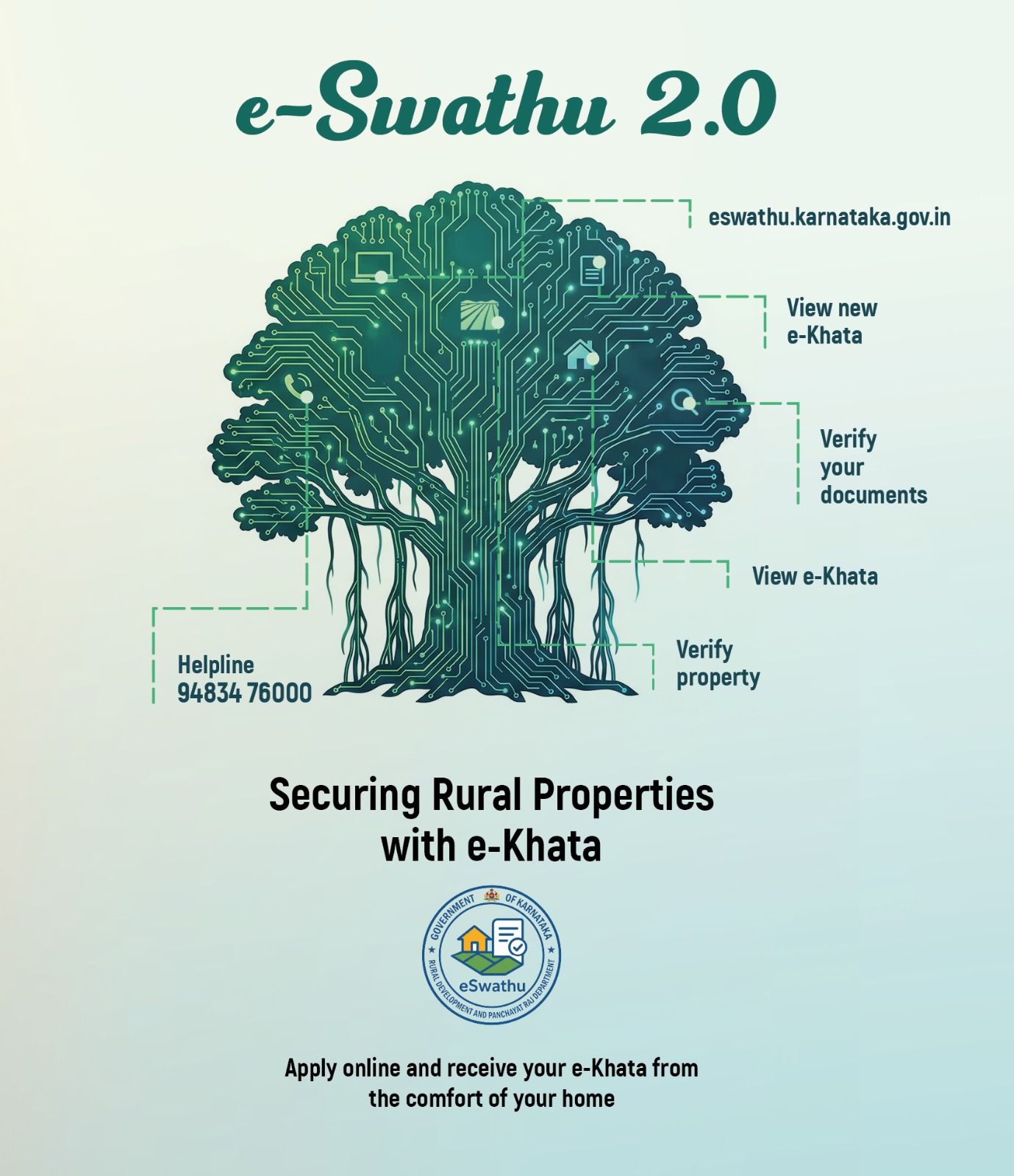
The Rural Development and Panchayat Raj Department, Government of Karnataka, implemented eSwathu 2.0 to transform rural property governance through a transparent, digital and citizen-centric system. Before the initiative, rural property administration depended heavily on manual Gram Panchayat registers, scattered records and inconsistent ownership information. This led to unauthorized layouts, duplicate Khatas, fraudulent transactions, ownership disputes, delays in mutation and poor traceability. Citizens were required to visit Panchayat offices repeatedly for Khatas, approvals, objections and grievance redressal, creating inconvenience and opportunities for discretionary decision-making.
To address these challenges, eSwathu 2.0 introduced a web-based rural property management and eKhata platform integrated with Aadhaar-based eKYC, digital signatures, GIS/GPS mapping, public verification, online objections, SMS alerts and automated workflows. The platform was also integrated with the KAVERI registration system to enable real-time property verification, deed validation and automated mutation initiation. Under the Faceless eKhata framework, citizens could verify draft records, upload documents, complete authentication and receive digitally signed eKhatas online without visiting Gram Panchayat offices.
The initiative has created one of India’s largest standardized rural property governance databases by digitizing more than 97 lakh rural property records across Gram Panchayats. It has strengthened transparency through public Draft eKhata publication, seven-day objection mechanisms, online appeals and digital audit trails. Automated verification and Aadhaar-based ownership authentication reduced manual intervention, corruption and delays. eSwathu 2.0 has improved legal certainty, citizen trust, ease of doing business and administrative efficiency, while establishing a scalable model for faceless, contactless and accountable rural property governance.
For more information, please contact:
Rahul Ratnam Pandey at Diregov.rdpr@gov.in
(The content on the page is provided by the Exhibitor)