MANTHAN – UTTHAN – Office of the Principal Scientific Adviser to the Government of India

MANTHAN – UTTHAN
Problem
- Fragmented Industry–Research Linkages: Industry, government and foundations lacked a structured and trusted mechanism to connect with academic institutions, startups, researchers and innovators at scale.
- Limited Visibility for Smaller Institutions: Tier-2 and Tier-3 institutions and smaller startups often remained invisible to funders and industry partners because of inadequate outreach infrastructure.
- Under-representation of Women in STEM: Women scientists and entrepreneurs faced limited access to funding, visibility and meaningful collaboration opportunities within the innovation ecosystem.
- Weak Pathways for Young Innovators: School-level innovators lacked structured mechanisms connecting them with mentors, funding sources and real-world industry problem statements.
- Scattered Opportunities and Weak Vetting: Researchers and startups had to search across disconnected sources, while funders lacked a common and credible mechanism for evaluating proposals.
Solution
- National Digital Collaboration Platform: Manthan created a full-stack digital platform connecting industry, government and foundations with academia, startups, MSMEs and research institutions.
- Centralised Opportunity Marketplace: The platform aggregates industry and government funding and innovation opportunities, making them more easily accessible to researchers and solution providers.
- Structured Peer Review: Industry-academic peer review, credentials-based tagging and Subject Matter Experts were introduced to strengthen the credibility and quality assessment of proposals.
- Integrated Digital Collaboration Tools: Video conferencing, open-source dashboards and end-to-end digital workflows were incorporated to support scalable collaboration and monitoring.
- Inclusive Outreach and Innovation Tracking: Manthan extends opportunities to lesser-known institutions while maintaining directories and tracking systems for innovations and market-ready technologies.
Outcomes
- ₹10,017 crore in funding opportunities were provided to India’s research and innovation ecosystem through the Manthan platform.
- 473 successful collaborations were created among industries, philanthropic institutions, government entities, academic institutions, startups, research institutions and MSMEs.
- ₹2,947 crore was disbursed to the research and innovation ecosystem through successful collaborations facilitated by Manthan.
- 22,625 lives were transformed through successful collaborations and development projects supported through the initiative.
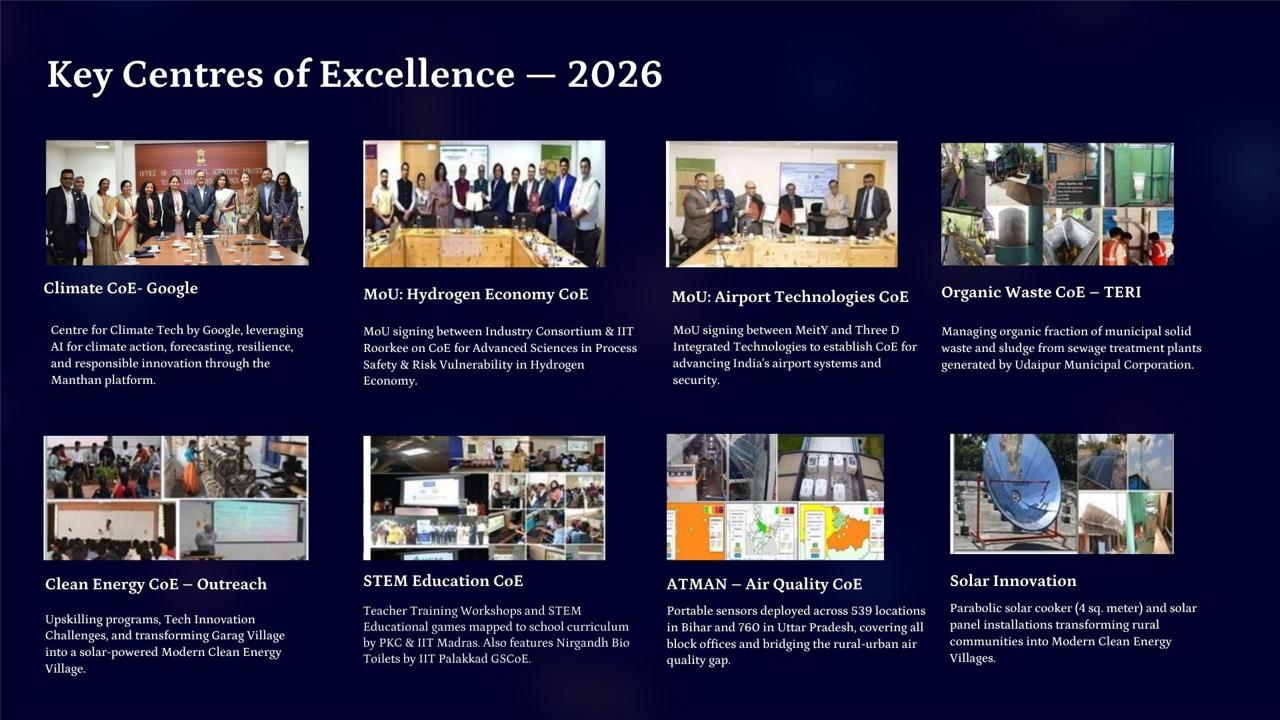
- 28 Centres of Excellence were established in strategic research and development areas, strengthening India’s institutional innovation capacity.
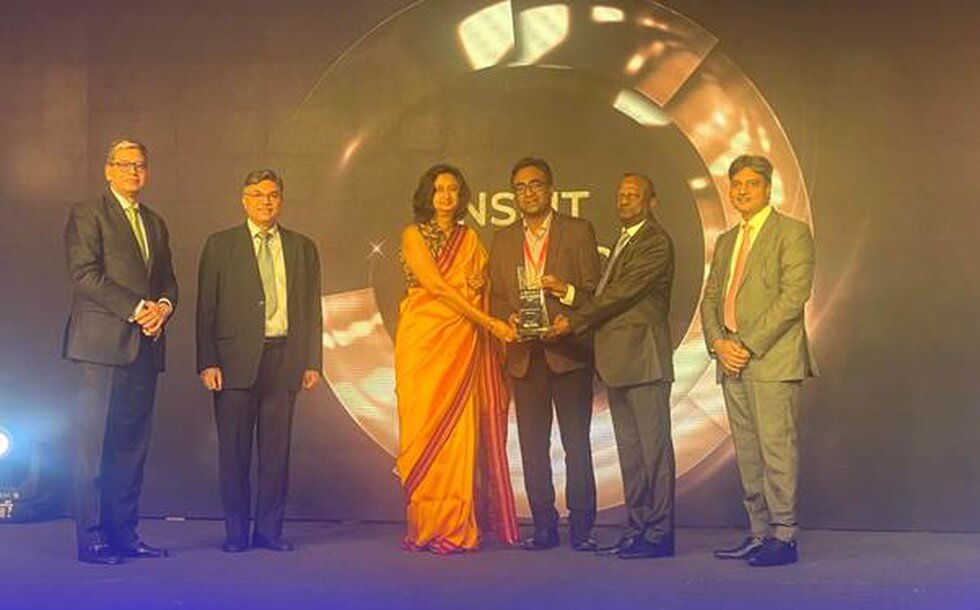
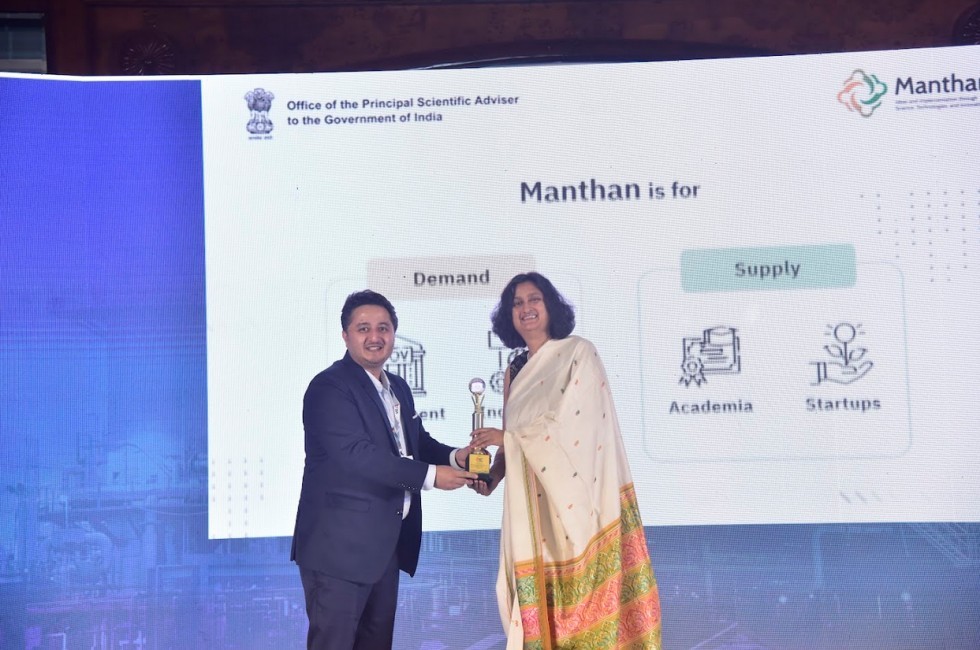
SKOCH Award Nominee
Category: Central Government
Sub-Category: Central Government
Project: MANTHAN – UTTHAN
Start Date: 8-15-2022
Organisation: Office of the Principal Scientific Adviser to the Government of India
Respondent: Sapna Poti
https://manthan.gov.in/
Level: Club
Video
See Presentation
Gallery

Case Study 01
MANTHAN: Building India’s Demand-Driven Bridge Between Industry and Academia
- An abridged form of original cast study by Ms Richa Gupta, Consultant with the Capacity Building Commission, Government of India
In April 2020, as the COVID-19 pandemic spread across India, Dr Sapna Poti of the Office of the Principal Scientific Adviser (PSA) to the Government of India coordinated innovators, laboratories, industry partners, and philanthropic organisations to address urgent health challenges. With no dedicated team or platform, she and two volunteers evaluated innovations, assessed manufacturing capabilities, and facilitated collaborations. This effort supported 162 projects and approximately ₹800 crore in emergency funding for health-related innovations.
The experience exposed a fundamental gap: India possessed substantial scientific expertise, research institutions, startups, and corporate social responsibility (CSR) resources, but lacked a systematic mechanism to connect those with problems to those with solutions. Collaboration depended heavily on personal networks, limiting reach, inclusion, and scalability. This experience led to the conception of Manthan.
The Innovation Gap and the Manthan Approach
India’s research and innovation ecosystem had strong capabilities across universities, public laboratories, and startups. However, government ministries often struggled to identify laboratories capable of addressing technical challenges. Companies with CSR budgets found it difficult to locate suitable innovation partners, while institutions in smaller cities received fewer collaboration opportunities than familiar, well-established institutions.
The Office of the Principal Scientific Adviser, established in 1999 to advise the Prime Minister and Cabinet on science, technology, and innovation, recognised the need for a more systematic approach. Professor Ajay Kumar Sood described the earlier method as “spray and pray,” where problems were circulated among a limited number of known institutions, making the process incident-dependent and difficult to scale.
Manthan was designed as a neutral, government-backed platform that would build trust and connect demand with supply. It would operate upstream of procurement portals such as the Government e-Marketplace (GeM), focusing on problem definition, partner discovery, and research and innovation collaboration rather than the purchase of finished goods and services.
Development and Launch
Manthan was conceived without an institutional budget. Initial development was supported through crowdsourced funding, co-funding from ACT Grants, cloud infrastructure from Amazon Web Services, and technical assistance from IIT Madras alumni. NSEIT subsequently became the technology development partner, and the PSA’s office formally adopted the platform.
Launched on 15 August 2022 as part of Azadi Ka Amrit Mahotsav, Manthan was built around four functional pillars: publishing opportunities for early-stage innovations, market-ready technologies, and centres of excellence; enabling collaborative proposal submissions; hosting virtual innovation exhibitions; and supporting conferences and focused group discussions.
The platform used “opportunity” instead of “problem statement” to make participation more accessible. Demand-side organisations posted opportunities, while researchers and innovators submitted proposals. Outcomes such as collaborations, funded projects, and centres of excellence were tracked to promote accountability.
Building Participation and Trust
Bringing real demand onto the platform was the first major challenge. Dr Poti and her colleagues engaged ministries, companies, and philanthropic organisations, explaining that Manthan complemented existing procurement and research portals. The Ministry of Mines became an early government adopter, while Samsung India used the platform for its Solve for Tomorrow programme.
Industry partners raised confidentiality concerns, particularly in technology-sensitive areas. Manthan addressed these through a dedicated industry research and development section where companies could share confidential challenges with selected academic partners. This helped create a trusted environment for collaboration.
On the supply side, the platform enabled researchers and innovators from any institution to submit proposals, with evaluation intended to focus on the quality and relevance of solutions rather than institutional prestige. Participants such as CultYvate, IIT Bombay, and Neotia University experienced greater access to opportunities and partners beyond their existing networks.
Measuring Outcomes and Expanding Impact
Manthan defined success not merely as a match between a problem owner and a solution provider, but as a verified project outcome. Its five-parameter monitoring system covered amplification, active curation, collaboration formation, project outcomes, and internal productivity.
The team followed up after proposal deadlines to confirm evaluations, memoranda of understanding, and project initiation. Further monitoring assessed whether funded projects resulted in centres of excellence, prototypes, or deployed innovations. This approach distinguished Manthan from platforms that measured activity without tracking results.
The platform facilitated collaborations including a Centre of Excellence on Sanitation at IIT Palakkad, a Dementia Studio at NIMHANS Bengaluru, and a sustainable aviation fuel initiative involving the Indian Institute of Petroleum, Airbus, and Mangalore Refinery and Petrochemicals Limited.
Manthan also received recognition through the Dun & Bradstreet Best Tech Initiative of the Year award and selection as one of eight global government initiatives presented at the 2024 World Government Summit in Dubai.
UTTHAN, RSVC, and Lessons Learned
Operational experience revealed that equal access to opportunities did not automatically create equal preparedness. Many smaller institutions required support in research methodology, problem framing, and technical documentation. The UTTHAN programme was developed to strengthen the capabilities of Tier-Two and Tier-Three institutions through capacity building, research methodology sessions, mathematical modelling, literature review, problem-solving, and innovation hubs.
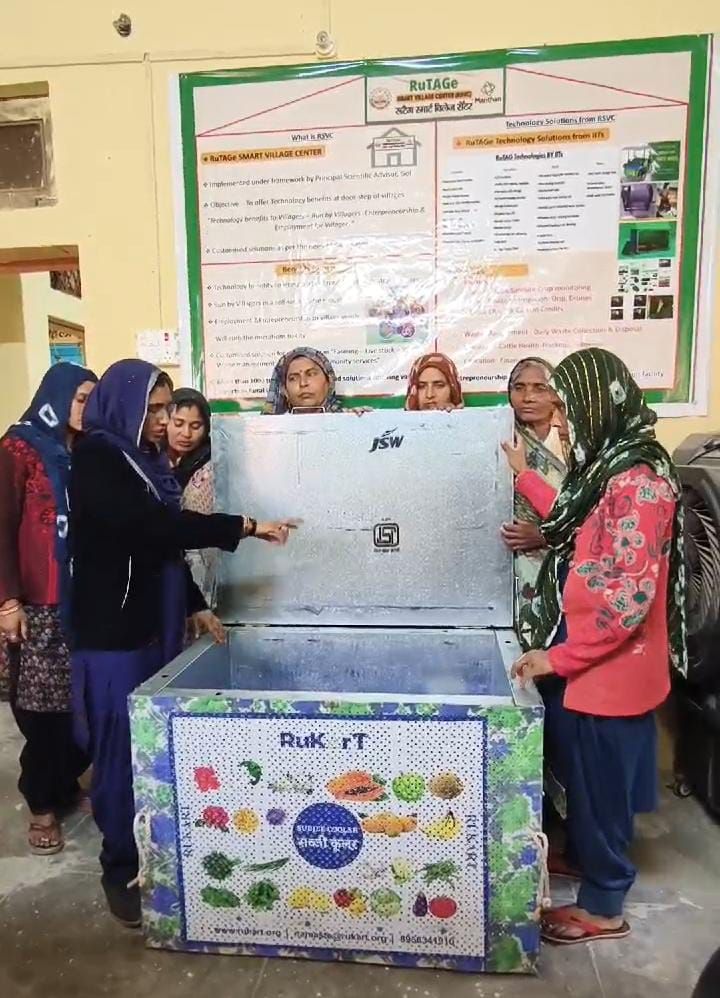
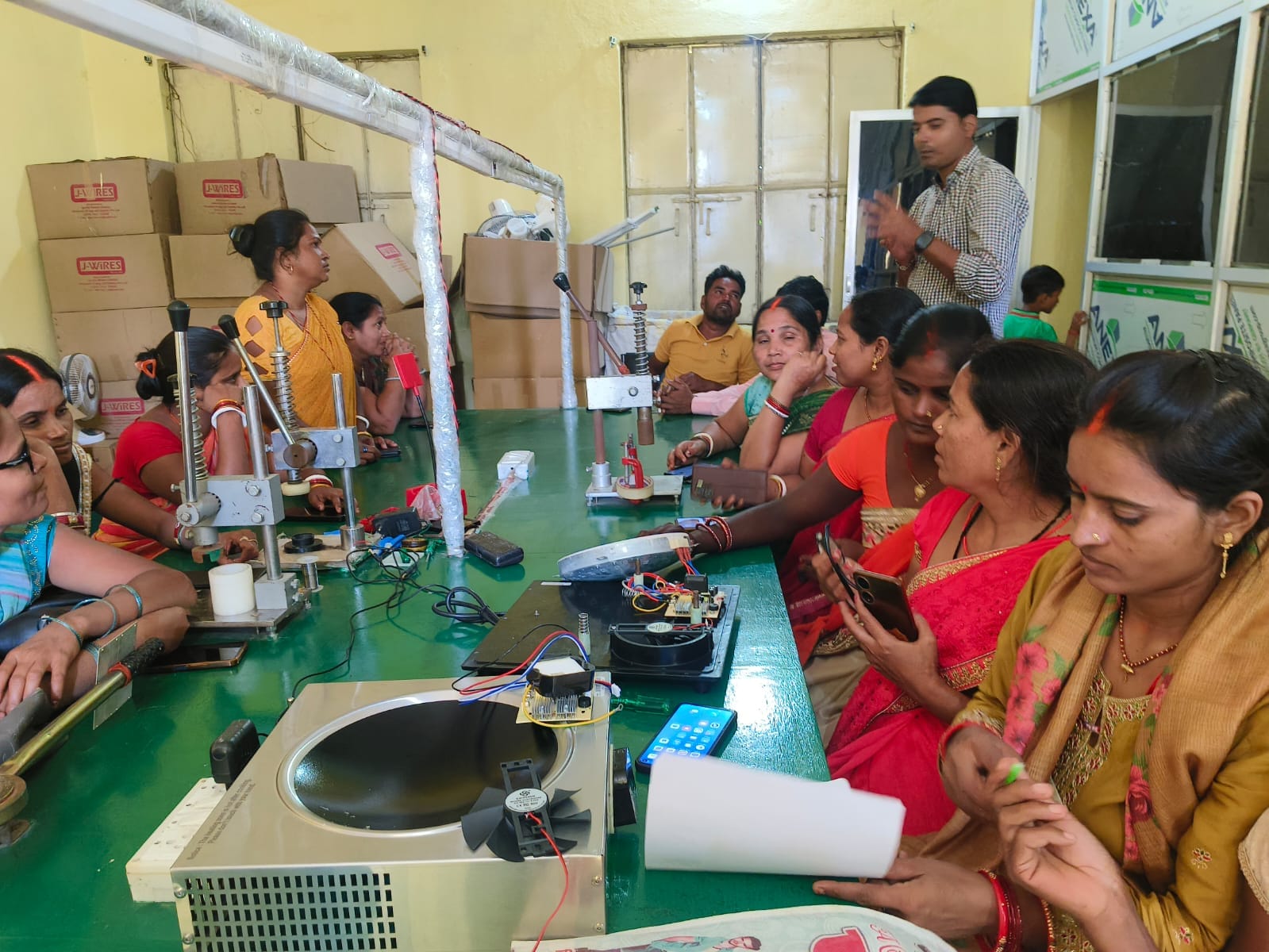
The Rural Smart Village Centre (RSVC) programme addressed a different gap: connecting proven technologies with rural populations and supporting market access and scale-up beyond early-stage research and development. These programmes emerged from Manthan’s operational learning.
The case study highlights that digital infrastructure alone cannot transform institutional behaviour. Human facilitation is essential for articulating problems, building trust, reaching less visible institutions, and ensuring collaboration follow-through. A demand-first strategy, government-backed credibility, and outcome-based monitoring were central to Manthan’s progress.
Finally, sustainability remained a critical challenge. The platform’s continuity depended on governance, institutional memory, technical capabilities, and maintenance funding. The case concludes that preserving Manthan’s impact requires transferring not only its codebase, but also the knowledge, monitoring discipline, and human facilitation that made its results possible.
Case Study 02
UTTHAN Capacity Building
Over the course of its Cohort 1 rollout, UTTHAN has implemented a structured series of capacity-building interventions for its Tier 2 and Tier 3 institutions, each addressing a specific gap identified through the LEAP assessment process and delivered by a domain expert brought in through UTTHAN’s growing network of partners. Four such interventions, spanning technology readiness, research funding, intellectual property and applied bioinformatics, illustrate how the programme translates institutional capability building into practical, hands-on learning.
Systematically Maturing Technology and Manufacturing Readiness
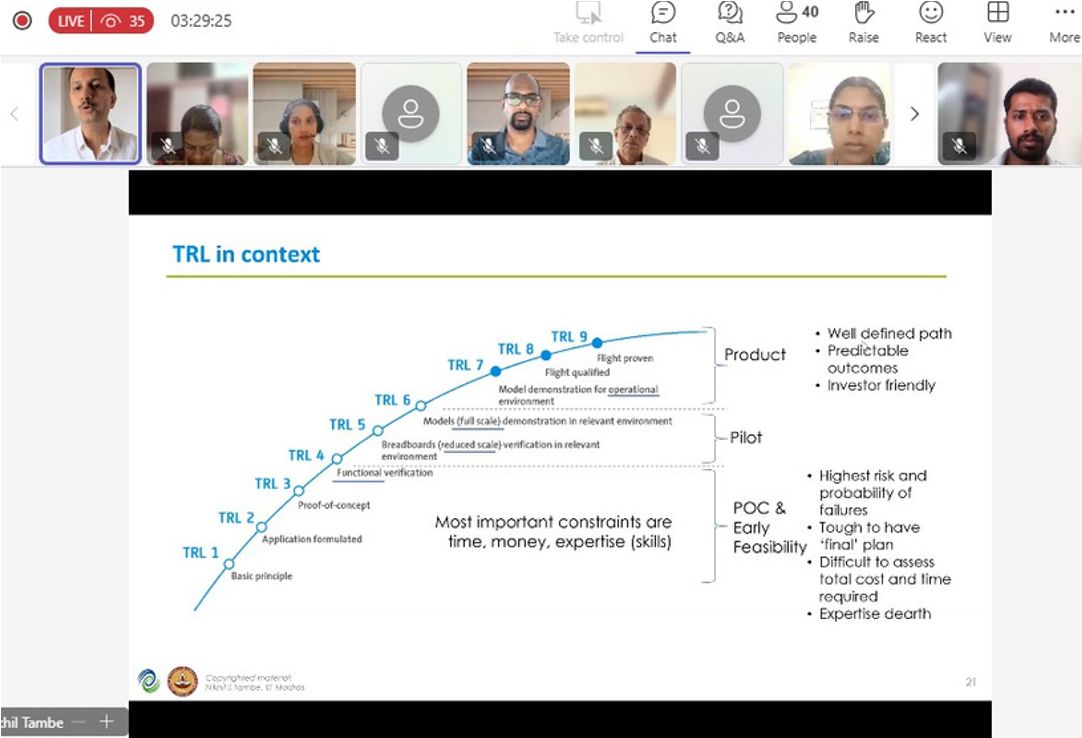
The first session, held on 2 June 2026, was co-organised with PALS (Professionals Advancing Learning in Society), which has engaged with Tier 2 and Tier 3 engineering institutions for fifteen years. PALS currently serves 67 partner institutes across five southern states, delivers more than 70 academic programmes annually and holds MoUs with incubation centres at leading IITs, providing UTTHAN with a ready-made network to draw on. Mr R Krishnamurti Rao, PALS Champion, opened the session with a walkthrough of this network before handing over to the main speaker, Dr Nikhil Tambe, Founding CEO of the Energy Consortium at IIT Madras.
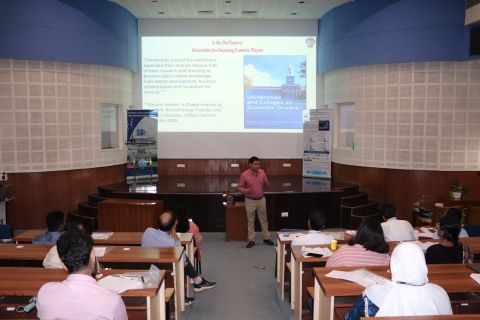
Over three hours, more than 40 faculty members, administrators and incubation managers from roughly 30 institutions worked through Technology Readiness Levels (TRL) and Manufacturing Readiness Levels (MRL). Dr Tambe presented the two scales as a shared language for researchers, engineers, manufacturers and customers, tracing TRL’s origin at NASA in 1974, its adoption in India by ISRO and DRDO and its current use in the Office of PSA’s National Technology Readiness Assessment Framework, developed jointly with the Confederation of Indian Industry. The session combined a walkthrough of the TRL 1 to 9 scale with real case studies, including the Chandrayaan-3 mission and an MCB industry collaboration and a live, 12-question interactive quiz with a real-time leaderboard to reinforce the concepts.
The Art of Grant Writing
On 13 June 2026, UTTHAN hosted a dedicated grant-writing session delivered by Dr Rohit Kumar H.G., Grants Manager at the Office of Research Grants (ORG), Indian Institute of Science (IISc), Bengaluru. ORG was established in 2020 to support IISc faculty across the full grant lifecycle, from identifying opportunities to post-award management. Dr Kumar brought that institutional experience, along with a background at the Department of Science and Technology, Government of Karnataka.
The session opened with a look at India’s research funding landscape, including national Gross Expenditure on Research and Development (GERD) figures, to help participants understand how competitive the space has become and closed with a live demonstration of the Manthan platform, showing participants how to discover and apply for funding opportunities directly.
Relevance of Intellectual Property Rights in Research
The third session, held on 23 June 2026, focused on intellectual property and was delivered by Ms Bindu Sharma, Founding Partner of Origin IP Solutions, a firm she established in 2010 and a registered patent agent at the Indian Patent Office. Ms Sharma’s background, recognition from NITI Aayog, a 2023 100 Women Achievers Award, a Top 100 Powerful Women in Law listing and over 400 talks delivered at national and international platforms gave the session real practitioner weight rather than a purely academic treatment of the subject.
The session opened with context underscoring the topic’s urgency: Indian educational institutions now account for roughly 39 per cent of national patent filings, with IISc converting 257 of 379 applications into granted patents and IITs collectively holding over 3,331 patents. As Ms Sharma pointed out, this evidence shows that Tier 2 institutions such as LPU, Saveetha, Galgotia, Chitkara and Chandigarh University are already active players in this space.
From Classroom to Research Pipeline: The Bioinformatics Talent Bridge
The most sustained intervention ran from 8 July to 27 August 2026, an eight-week Academia-Incubator-Industry programme in bioinformatics, computational biology and drug discovery. The Bangalore Bioinnovation Centre (BBC), a Section 8 company incubating life-science innovation under the Government of Karnataka and the Department of Biotechnology, served as the implementation partner, coordinating curriculum and expert access, while MolVerse, a deep-tech startup incubated at BBC and focused on accelerating molecular discovery, served as the industry partner.
Across 23 structured sessions, led primarily by BBC’s own scientists and MolVerse’s technical team, participants progressed from the fundamentals of bioinformatics and biological databases to structural bioinformatics, next-generation sequencing analytics, sequence analysis, phylogenetics, drug design, molecular docking and molecular dynamics simulation. Eight invited experts broadened the scope further, bringing perspectives from AIIMS New Delhi on NGS analytics in healthcare, Innule Biosciences on the entrepreneurial journey, GPU University on behavioural genomics and Reagene Biosciences on AI’s impact on life sciences, among others.
What set this programme apart was its problem-based component. Three institutions, Meerut Institute of Engineering & Technology, Sri Krishnadevaraya University in Anantapur and St. Joseph Engineering College in Mangaluru, applied the databases, tools and computational methods learned during the programme, including BLAST, PyMOL, UCSF Chimera/ChimeraX, OMIM, GeneCards and DrugBank, to real-world research problems in the genome-to-phenome and precision diagnostics space. All three are now converting their computational analyses into manuscripts for peer-reviewed publication, extending the programme’s outcomes beyond training completion and into the scientific literature, while also building inter-institutional research links across Uttar Pradesh, Andhra Pradesh and Karnataka that did not exist before the cohort began.
International Capacity-Building Partnership: Australia
Alongside these domestic sessions, UTTHAN’s capacity-building efforts now extend internationally through a partnership with Australia. The Australia India Institute (AII), funded by the Australian Government Department of Education, is running a dedicated project with the Regional Universities Network (RUN) and the Section Infin8 Foundation to connect regionally headquartered Australian universities with UTTHAN’s Tier 2 and Tier 3 institutions. The project falls under Pillar 1 of UTTHAN, which focuses on capacity-building for academia and start-ups to improve innovation outcomes and targets L3 institutions identified through the LEAP framework.
Taken together, these interventions reflect UTTHAN’s underlying approach to capacity building.
For more information, please contact:
Sapna Poti at sapna.poti@gov.in
(The content on the page is provided by the Exhibitor)