
NH-163 Warangal Highway – Landscape Beautification & Greenery Project – Hyderabad Metropolitan Development Authority

NH-163 Warangal Highway
Problem
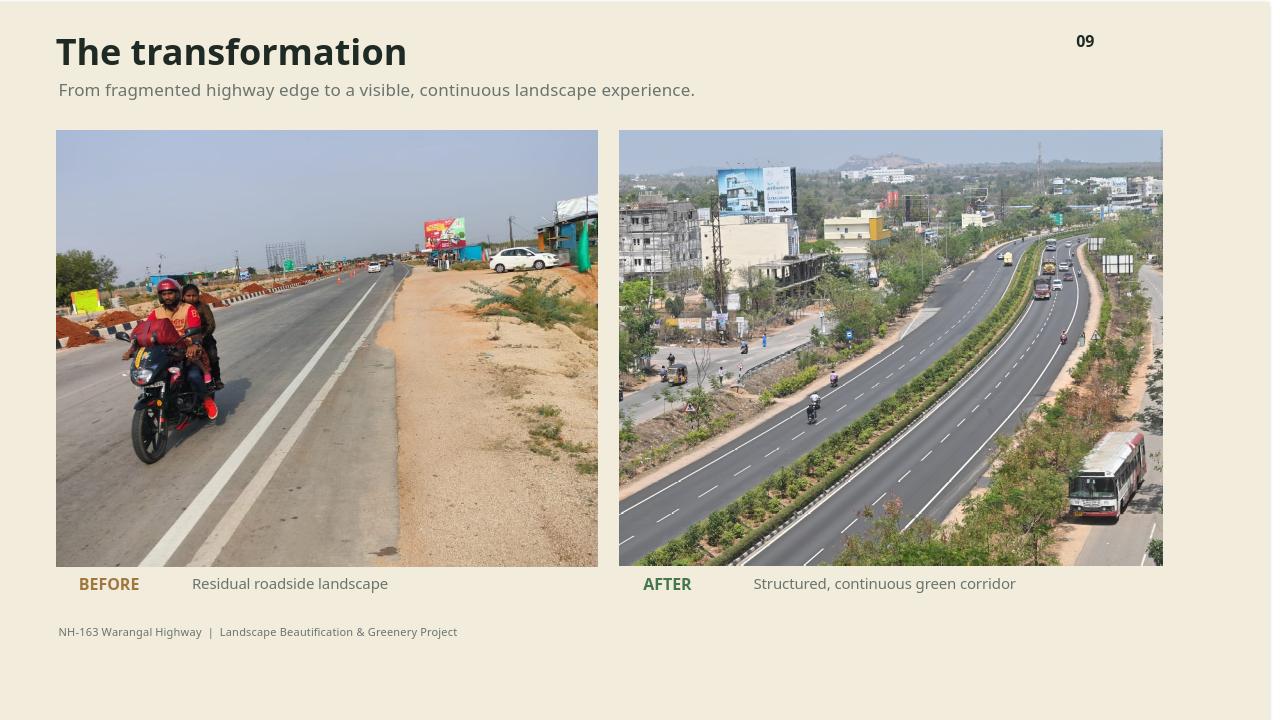
- Barren highway edges: Large stretches lacked meaningful greenery, creating an opportunity to transform the corridor into a continuous metropolitan green infrastructure.
- Environmental degradation: Dust, pollution, soil erosion, and limited vegetation required landscape interventions to restore ecological quality and improve roadside conditions.
- Harsh site conditions: Semi-arid climate, water scarcity, and challenging soils demanded hardy, drought-resistant species and sustainable planting strategies.
- Road safety: Median landscaping needed to enhance visual quality while maintaining appropriate plant heights, visibility, and safe traffic movement.
- Biodiversity opportunity: A multilayered plantation could introduce native and flowering species, create microhabitats, and strengthen biodiversity along the 93-km highway corridor.
Solution
- Site identification and survey: The 93-km highway stretch was surveyed to identify suitable locations for median plantations, sidewalks, and vacant areas, taking into account soil, climate, safety, and visibility requirements.
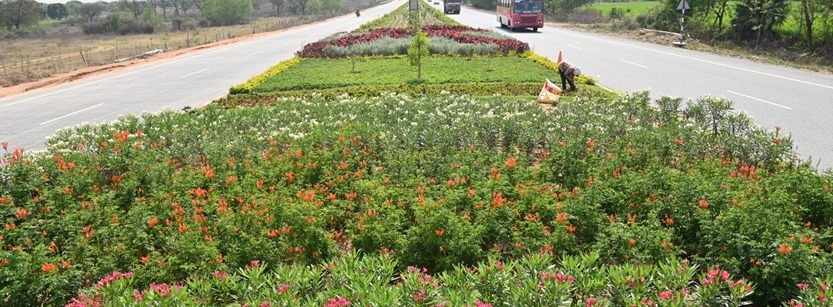
- Planning and species selection: A multilayered plantation strategy was developed using native trees, topiary plants, shrubs, flowering plants, and groundcovers suited to the semi-arid climate and water-scarce conditions.
- Approvals and procurement: Estimates were prepared, followed by Administrative Sanction from the Metropolitan Commissioner, Technical Sanction from the Director, Urban Forestry, and procurement through the e-procurement platform.
- Site preparation and plantation: Plantation pits of specified dimensions were excavated and filled with topsoil, sand, and FYM. Healthy nursery-grown plants were planted during the monsoon with appropriate spacing, alignment, watering, and soil compaction.
- Maintenance and monitoring: Dedicated teams undertake irrigation, pruning, weeding, pest control, gap filling, and removal of litter and debris, establishing 19,28,169 plants across 93 km.
Outcomes
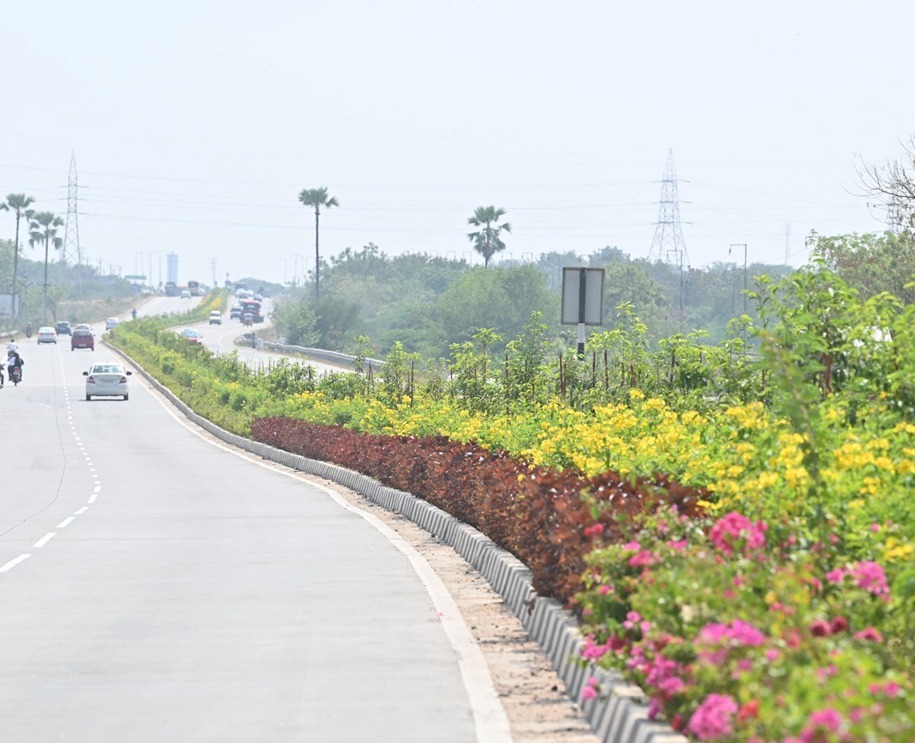
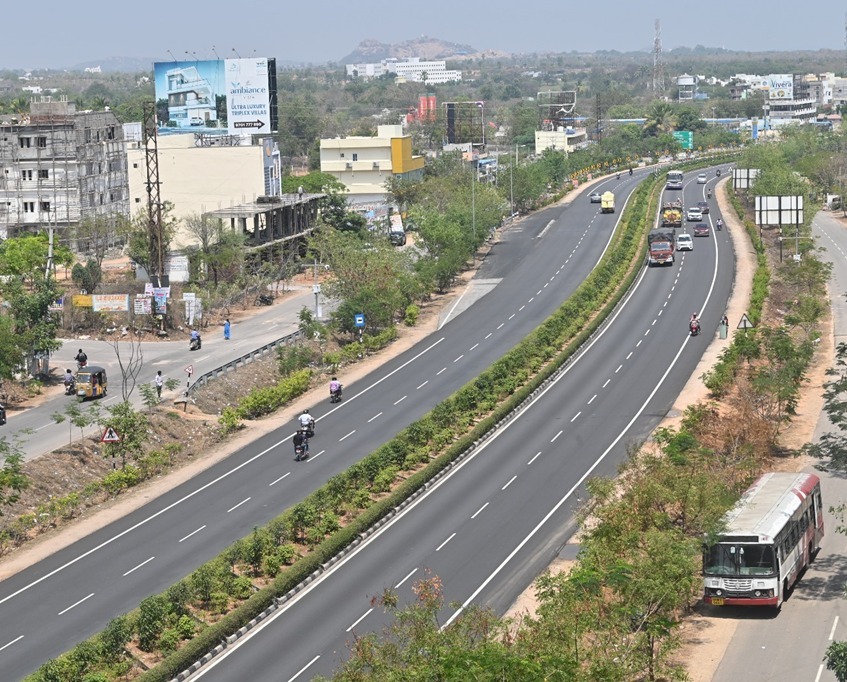
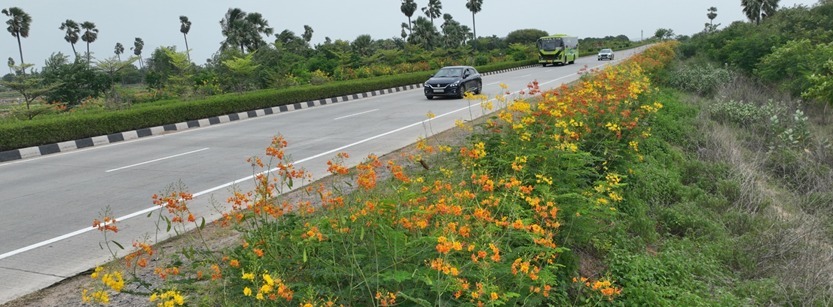
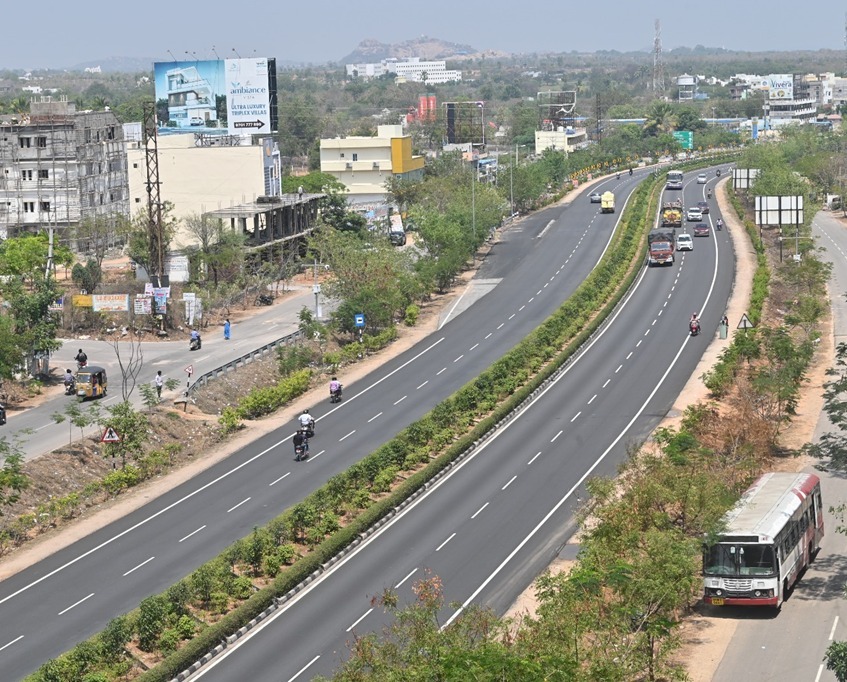
- Green corridor created: Transformed 93 km of highway from a largely barren stretch into a continuous multilayered green corridor.
- Large-scale greening achieved: Established 19,28,169 plants, significantly increasing green cover along the highway.
- Ecological restoration: Improved soil health, reduced erosion, and created microhabitats supporting birds, insects, and local flora.
- Improved highway experience: Enhanced the corridor’s visual quality while maintaining safety and visibility through appropriately designed median planting.
- Community and conservation impact: Increased local participation in plantation, conservation, and maintenance, fostering greater community ownership of the highway’s green infrastructure.
Challenges
- Water scarcity: Limited water availability, particularly during dry seasons, made irrigation and plant establishment a major operational challenge.
- Harsh highway conditions: Plants had to withstand traffic emissions, dust, heat, limited soil depth, and restricted growing conditions within the median.
- Difficult soil conditions: The presence of red sandy loam and black cotton soils required appropriate soil preparation and selection of hardy species.
- Large-scale maintenance: Maintaining 19.28 lakh plants across 93 km required continuous irrigation, pruning, weeding, pest control, and gap filling.
- Safety and visibility: Plantation design had to balance extensive greenery and beautification with clear sightlines, traffic safety, and appropriate plant heights along the highway.
SKOCH Award Nominee
Category: State Government – Municipal Administration & Urban Development
Sub-Category: State Government – Municipal Administration & Urban Development
Project: NH-163 Warangal Highway – Landscape Beautification & Greenery Project
Start Date: 4-01-2020
Organisation: Hyderabad Metropolitan Development Authority
Respondent: Rohith Gopidi
https://www.hmda.gov.in/
Level: Premium Plus
Video
See Presentation
Gallery
Case Study
NH-163 Warangal Highway Landscape Beautification & Greenery Project
Executive Summary
The NH-163 Warangal Highway Landscape Beautification & Greenery Project demonstrates how strategic landscape-led planning can transform a barren 93 km transportation corridor into a resilient green infrastructure network. Executed by the Hyderabad Metropolitan Development Authority (HMDA), the initiative integrated native trees, shrubs, and low-profile median planting to enhance ecology, improve road safety, and increase public value across the region.
Background & Objectives
Stretching from Ghatkesar to Chinnapendyal, the corridor previously suffered from environmental degradation, dust pollution, and soil erosion under harsh semi-arid climatic conditions. The primary objectives were:
- Enhance overall green cover along 93 km using a multilayered plantation model.
- Mitigate dust, improve soil health, and restore local flora and fauna microhabitats.
- Maintain sightlines and traffic safety through low-profile median planting.
- Establish a scalable model for highway sustainability in water-scarce environments.
Solutions
Led by Metropolitan Commissioner Mr. Sarfaraz Ahmad and Urban Forestry Director Mr. Rohith Gopidi, HMDA followed a structured multi-phase deployment:
- Site Assessment & Planning: Evaluated soil conditions (red sandy loam and black cotton soils) and selected hardy, drought-resistant species suited to limited water conditions.
- Implementation: Excavated designated pits refilled with topsoil, sand, and organic manure. Plantations were scheduled during the monsoon season to maximize survival rates.
- Execution & Maintenance: Planted over 19.28 lakh plants across four distinct highway segments, backed by dedicated teams managing irrigation, pruning, pest control, and weeding.
Results & Impact
The initiative achieved significant outcomes across ecological, operational, and visual domains:
- Environmental Restoration: Successfully planted 19,28,169 plants across 93 km, converting a barren space into a continuous green belt.
- Biodiversity & Soil Quality: Reduced soil erosion and created vibrant microhabitats for birds, insects, and pollinators.
- Road Safety: Maintained clear driver visibility and reduced headlight glare using structured median layouts.
- Community Engagement: Encouraged local participation in conservation and maintenance efforts, fostering public ownership.
Key Lessons & Future Outlook
The project highlighted the necessity of tailoring planting choices to local climate and soil conditions rather than applying standardized templates. It underscored that large-scale infrastructure greening requires long-term irrigation and maintenance planning. HMDA plans to replicate this sustainable model across other major highways in the state.
For more information, please contact:
Rohith Gopidi at directoruf@gmail.com
(The content on the page is provided by the Exhibitor)