
Nehru Outer Ring Road (ORR), Hyderabad – Greenery & Automated Drip Irrigation System – Hyderabad Metropolitan Development Authority

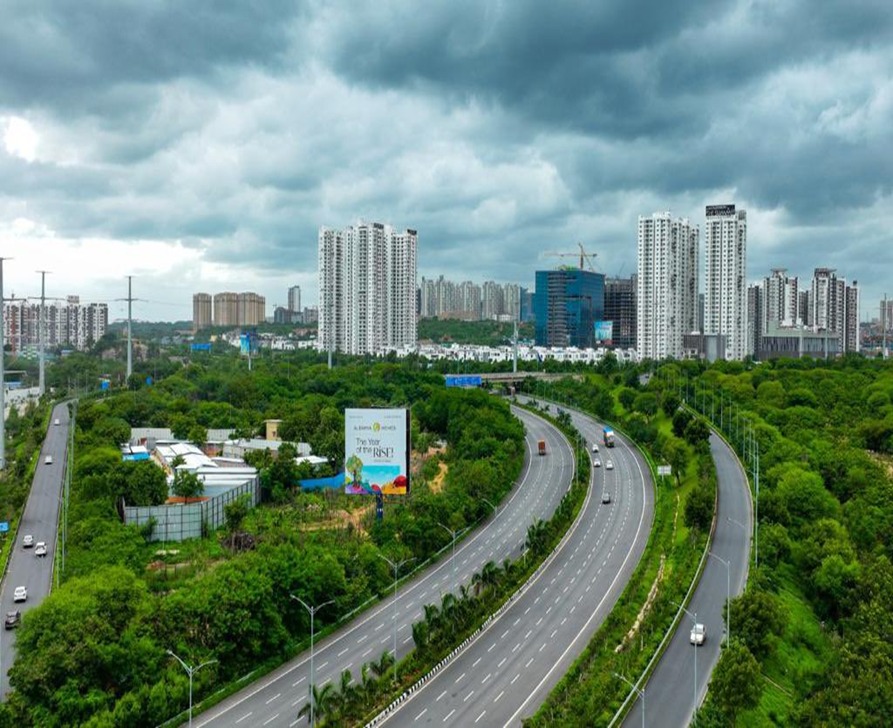
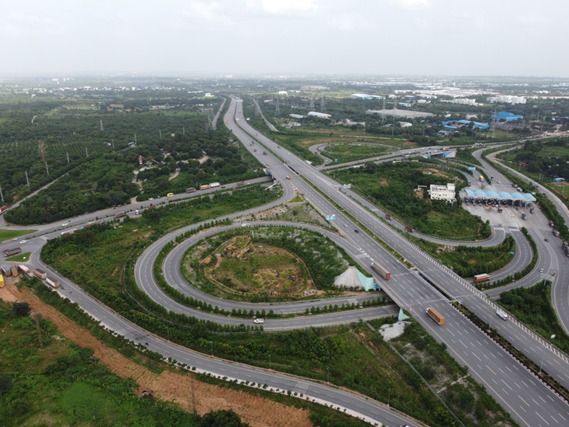
Nehru Outer Ring Road (ORR), Hyderabad
Problem
- Inefficient tanker irrigation: Manual watering was costly, inefficient, and difficult to manage across the 158-km high-speed ORR.
- Worker safety risks: Frequent movement of water tankers along the expressway exposed irrigation workers and operations to accident risks.
- High water consumption: Conventional watering required large quantities of water, creating an opportunity for more efficient and targeted irrigation.
- Large-scale maintenance challenge: Approximately 75 lakh plants across medians, carriageways, interchanges, and service corridors required reliable, timely irrigation.
- Technology opportunity: A centralized automated system was needed to enable precise watering, remote monitoring, and faster detection of leakages or system failures.
Solution
- System planning: The 158-km ORR was divided into 5 packages and 62 blocks, with each block equipped with a borewell, sump, pump room, and irrigation infrastructure.
- Infrastructure development: Borewells, 50,000-litre sumps, pump rooms, motors, pipelines, valves, and drip components were installed or upgraded across the identified blocks.
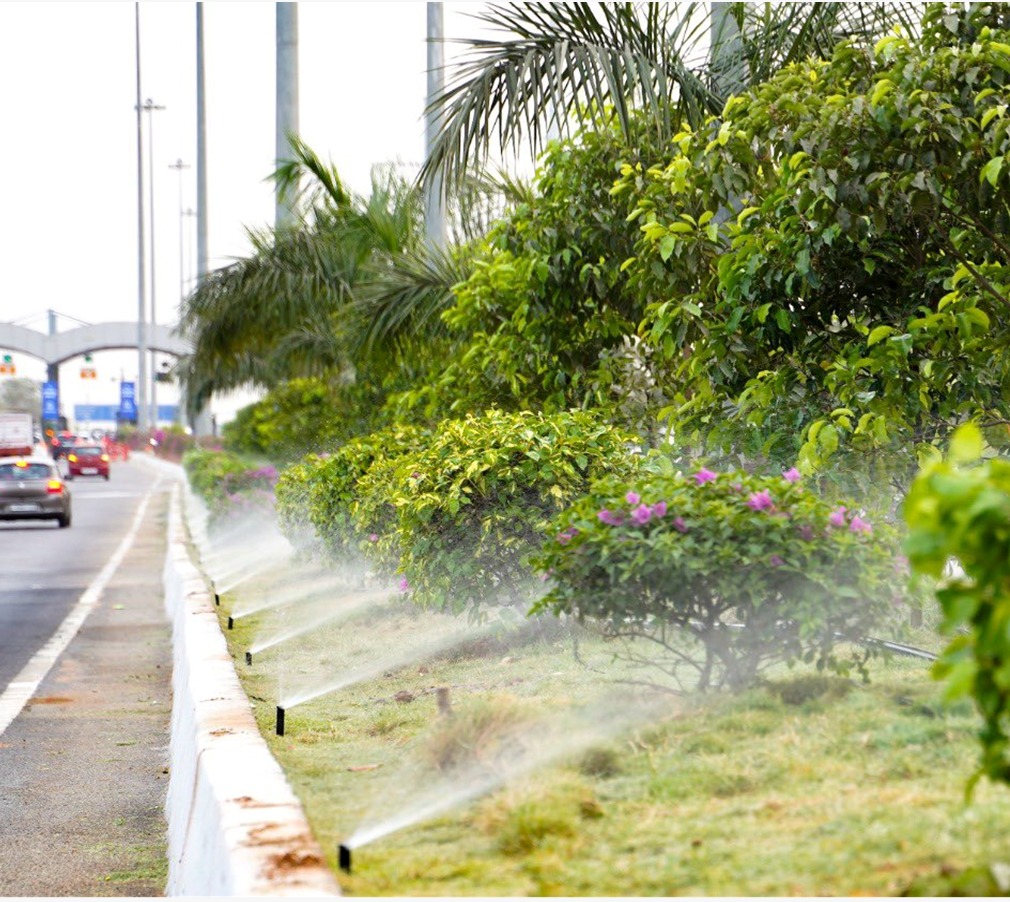
- Automated irrigation network: Nine drip lines were installed—three along each side of the ORR and three in the central median—to provide targeted and uniform watering.
- SCADA integration: The irrigation system was connected to SCADA-based automation using base and remote units with 4G connectivity, enabling programmed operation and detection of leakages and failures.
- Commissioning and O&M: The system was handed over to the Urban Forestry Wing on 01 April 2022 for regular supervision, monitoring, maintenance, and protocol-based breakdown resolution.
Outcomes
- Water savings: The automated system saves approximately 1.82 crore litres of water per month, equivalent to around 731 tanker trips.
- Cost savings: The projected seven-year maintenance cost was reduced from ₹139.72 crore to ₹98.38 crore, resulting in savings of ₹41.34 crore.
- Safer operations: Dependence on water tankers and manual irrigation was substantially reduced, lowering operational and worker-safety risks on the high-speed ORR.
- Automated maintenance: The entire 158-km greenery network is irrigated through a SCADA-based automated system covering 62 blocks, enabling programmed operation and detection of leakages and failures.
- Sustained green infrastructure: The system supports the maintenance of approximately 75 lakh plants across the ORR, helping preserve Hyderabad’s major metropolitan green corridor.
Challenges
- Water scarcity: Reduced borewell yield during summer created the need to supplement the system with tanker-supplied water to protect the greenery.
- Accidental pipeline damage: ORR accidents occasionally damaged drip pipelines, requiring temporary tanker watering until repairs were completed.
- Large-scale infrastructure: Implementing and coordinating an automated irrigation network across 158 km, 62 blocks, and multiple interchanges required substantial infrastructure and operational coordination.
- System maintenance: Maintaining borewells, pumps, sumps, valves, pipelines, and automation equipment required continuous monitoring and timely repairs, with critical repairs stipulated within 24 hours.
- Additional plantation coverage: New Plumeria pudica rows added after the original system was implemented were not covered by the existing drip lines, creating a temporary dependence on tanker irrigation.
SKOCH Award Nominee
Category: State Government – Municipal Administration & Urban Development
Sub-Category: State Government – Municipal Administration & Urban Development
Project: Nehru Outer Ring Road (ORR), Hyderabad – Greenery & Automated Drip Irrigation System
Start Date: 4-01-2022
Organisation: Hyderabad Metropolitan Development Authority
Respondent: Rohith Gopidi
https://www.hmda.gov.in/
Level: Premium Plus
Video
See Presentation
Gallery
Case Study
Nehru Outer Ring Road (ORR) Automated Drip Irrigation System
Executive Summary
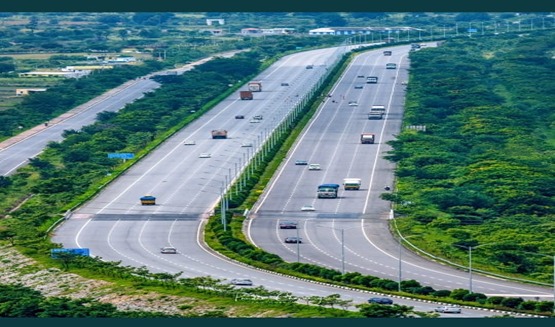
The Nehru Outer Ring Road (ORR) Greenery & Automated Drip Irrigation Project in Hyderabad demonstrates how technology can transform the management of large-scale urban green infrastructure. Spanning 158 km, the ORR encompasses nearly 75 lakh plants along central medians, carriageways, interchanges, service roads, and railway corridors. By transitioning from traditional tanker-based watering to a SCADA-automated drip irrigation network, the Hyderabad Metropolitan Development Authority (HMDA) achieved significant cost savings, improved operational safety, and enhanced water conservation.
The Challenge
Maintaining extensive greenery across a 158-km high-speed expressway presented major operational, financial, and safety obstacles:
- High Operational Costs: Tanker-based irrigation was expensive and inefficient for large-scale maintenance.
- Worker Safety Risks: Tankers moving along high-speed corridors exposed workers and motorists to frequent accident hazards.
- Resource Inefficiency: Manual distribution led to high water consumption without uniform delivery.
- Maintenance Complexity: Ensuring regular watering for 75 lakh plants required a more dependable, centralized approach.
The Solution
HMDA introduced a SCADA-based automated drip irrigation system divided into 5 packages and 62 operational blocks (each approx. 3 km long):
- Infrastructure Setup: Each block was equipped with borewells, 50,000-litre sumps, pump rooms, motors, and pipelines.
- Targeted Drip Network: Nine drip lines were installed—three along each side of the ORR and three in the central median.
- SCADA & Automation: Base and remote units with 4G connectivity were integrated to enable automated scheduling, remote monitoring, and automated detection of leaks or system failures.
- Supervision: Following installation, the system was handed over to the Urban Forestry Wing on April 1, 2022, for ongoing maintenance and operations.
Key Results & Impact
The deployment delivered substantial economic, environmental, and safety benefits:
- Water Conservation: Saves approximately 1.82 crore litres of water per month, eliminating roughly 731 tanker trips monthly.
- Cost Reduction: Reduced the seven-year projected maintenance cost from ₹139.72 crore to ₹98.38 crore, yielding ₹41.34 crore in net savings.
- Enhanced Safety: Significantly minimized tanker traffic on the expressway, lowering accident risks for workers and commuters.
- Reliable Coverage: Efficiently sustains 75 lakh plants, preserving Hyderabad’s primary green corridor.
Lessons Learned & Future Plans
The project proves that SCADA-driven automation is a viable, scalable model for highway greenery management. Operational experience highlighted the need for prompt response protocols during summer borewell yield drops or vehicle-induced pipeline damage. To cover newly added plantations such as Plumeria pudica, HMDA plans to expand the network from 9 to 13 drip lines, further reducing reliance on tankers.
For more information, please contact:
Rohith Gopidi at directoruf@gmail.com
(The content on the page is provided by the Exhibitor)