
Skill Development Progress & Impact – Cantonment Board Roorkee

Skill Development Progress & Impact
Problem
- A gap exists between industry requirements and the employable skills of youth due to a lack of practical and job-oriented training.
- There is a lack of opportunities for developing digital, technical, and soft skills, which hinders employability and self-employment prospects.
- Rural and economically weaker sections of society face limited access to affordable skill training.
- Specialised vocational and startup-oriented skill development initiatives are needed to promote entrepreneurship and innovation.
- Collaboration with industries and institutions is weak regarding internships, apprenticeships, and placement opportunities.
Solution
- Expanding vocational courses to introduce new skill domains in emerging sectors, like AI and robotics, to improve local employability.
- Transforming the facility into a Skill Hub to centralise training, assessment, and placement services while providing career counselling.
- Partnering with local industries in Roorkee for internships, apprenticeships, and placements, alongside accessing national opportunities via the PMKVY framework.
- Modernising labs and workshops with upgraded technology and integrating e-learning platforms and digital tools for tech-driven learning.
- Focusing specifically on training women, differently-abled individuals, and marginalised groups to ensure inclusivity in skill development.
Outcomes
- Trained youth experienced increased employability and job placement opportunities through the industry-relevant skill development programs.
- Participants achieved improved confidence, technical knowledge, and entrepreneurial capabilities.
- Participation from rural and economically weaker sections in vocational and digital skill training initiatives was enhanced.
- Collaborations with industries and institutions were strengthened to provide better internships, apprenticeships, and employment opportunities.
- Local economic growth was supported by the successful promotion of self-employment, productivity, and a skilled workforce.
SKOCH Award Nominee
Category: Autonomous Body
Sub-Category: secAutonomous Body
Project: Skill Development Progress & Impact
Start Date: 4-01-2025
Organisation: Cantonment Board Roorkee
Respondent: Digvijay Singh
https://roorkee.cantt.gov.in/
Level: Club Star
Video
See Presentation
Gallery
Case Study
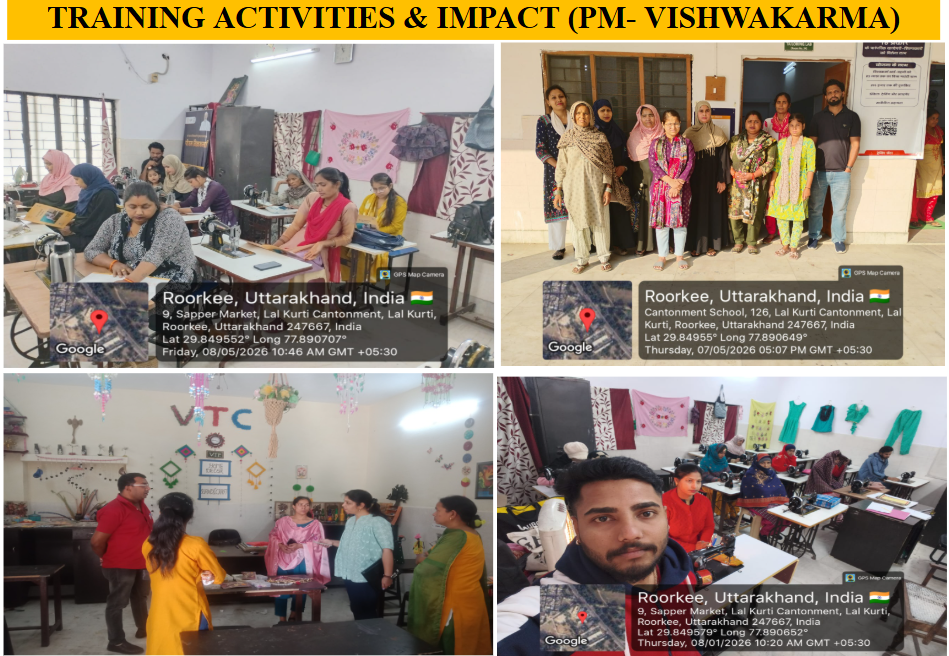
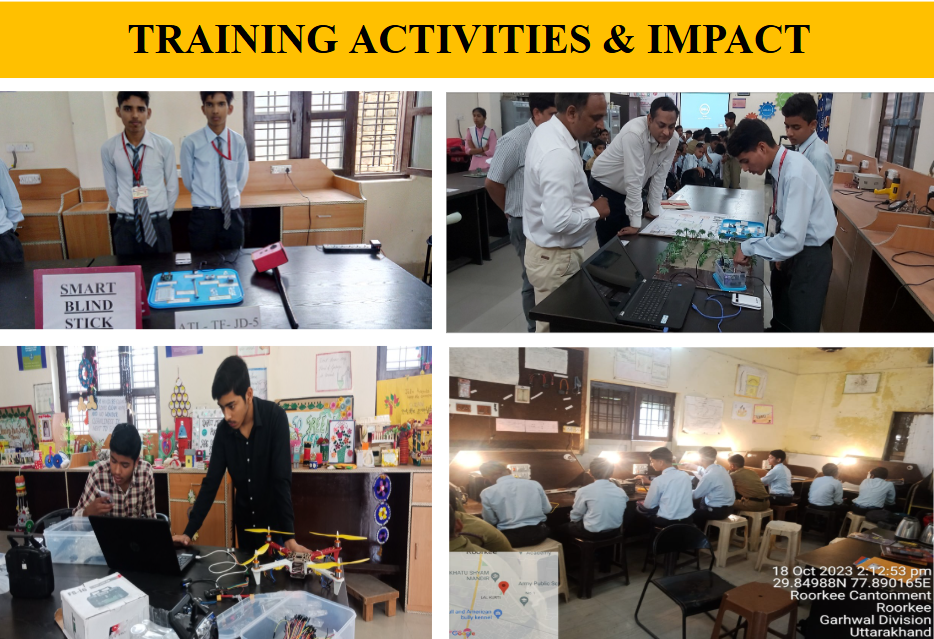
The Cantonment Board School in Roorkee has successfully operated its Vocational Training Institute and Skill Development Centre since 2011 to bridge the employable skills gap among local youth. In recognition of its consistent performance, the institute was selected under the Pradhan Mantri Kaushal Vikas Yojana (PMKVY) 4.0 flagship scheme, supported by the National Skill Development Corporation and the Ministry of Skill Development & Entrepreneurship. This initiative addresses the critical lack of digital, technical, and soft skill opportunities, specifically targeting individuals from rural and economically weaker sections who face restricted access to affordable vocational training.
To overcome these challenges, the institution introduced six certified modules tailored to local industry demands: IT Technical Support, Home Décor, Electronics Service, Domestic Electrical Solutions, Senior Beauty Therapy, and Sewing Machine Operation. By modernising its labs and upgrading its workshop technologies, the school effectively transformed into a comprehensive Skill Hub that provides centralised training, assessments, and structured career counselling. Furthermore, the campus integrated the PM Vishwakarma Scheme under the Ministry of MSME, offering specialised training in tailoring and malakar trades, along with essential toolkits, to promote sustainable livelihoods.
The program has generated substantial outcomes by significantly improving the confidence, technical capabilities, and employment opportunities of its trainees. Local economic growth has been positively stimulated through the active promotion of self-employment and an enhanced workforce. Moreover, the intervention has successfully optimised social inclusion by ensuring dedicated training access for women and marginalised groups, thereby bridging the divide between conventional education and modern industry demands.
For more information, please contact:
Digvijay Singh at ceoroor-stats@nic.in
(The content on the page is provided by the Exhibitor)