
Himayatsagar Eco-Hill Park – Hyderabad Metropolitan Development Authority

Himayatsagar Eco-Hill Park
Problem
- Degraded Terrain: Degraded rocky terrain and an abandoned quarry landscape required ecological restoration while maintaining the site’s geological character.
- Access & Movement: Steep, highly undulating terrain posed challenges for providing safe, accessible, and comfortable movement across the site.
- Limited Ecological Access: Fragmented, difficult-to-access natural areas limited visitors’ opportunities to experience the landscape and its features.
- Resource Conservation: Sparse vegetation and exposed rocky surfaces required a context-sensitive approach to establish greenery while conserving natural resources.
- Lack of Public Amenities: A lack of meaningful public amenities created the need to transform an underutilized landscape into an inclusive, nature-oriented public destination.
Solution
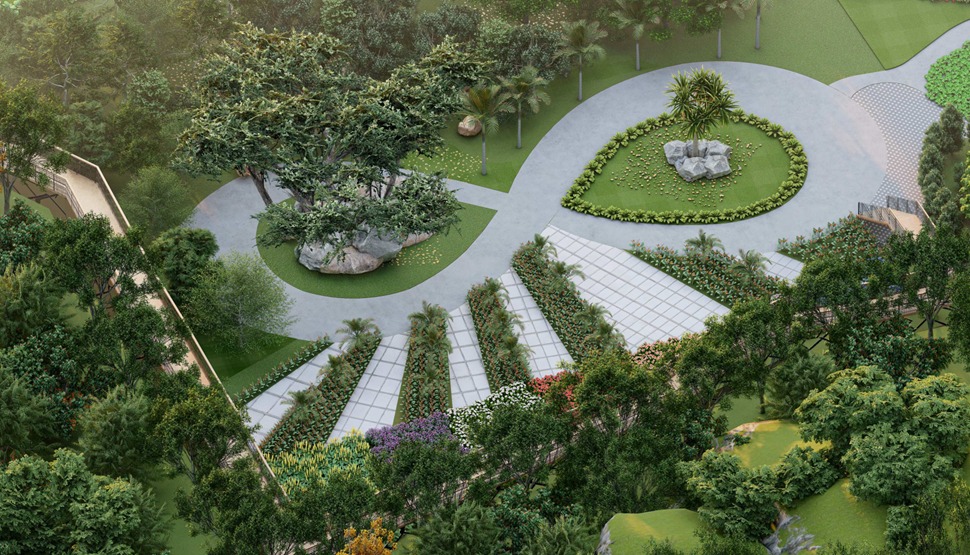
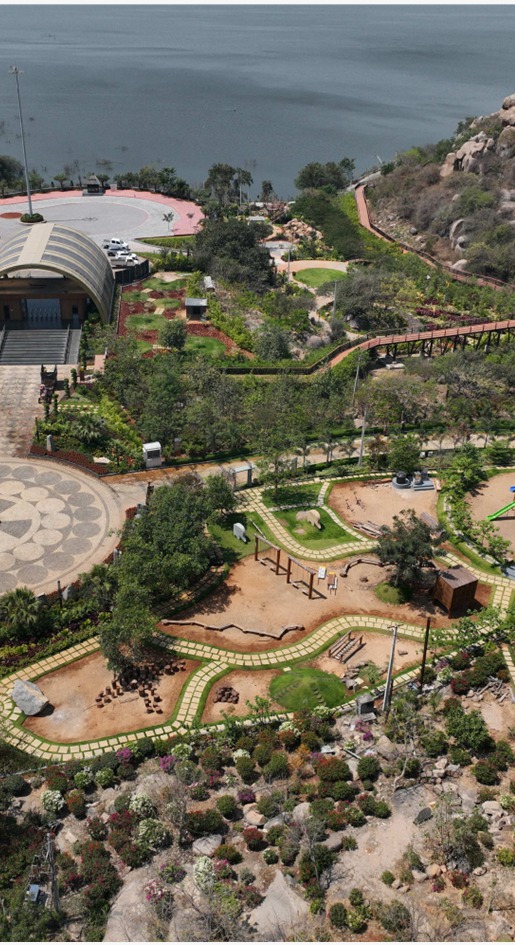
- Site-Led Planning: Existing topography, rocky terrain, and ecological features were incorporated into the landscape strategy, avoiding extensive alteration of the site.
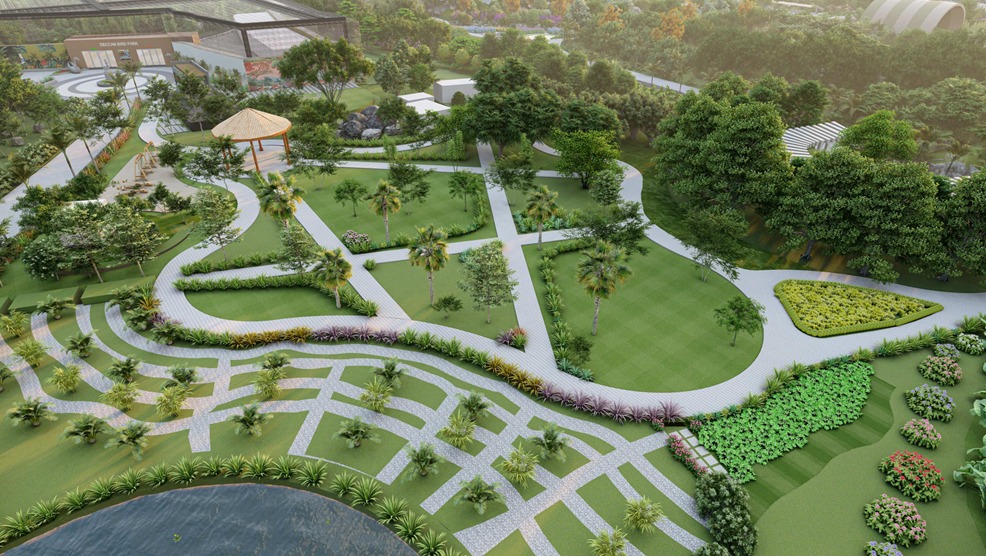
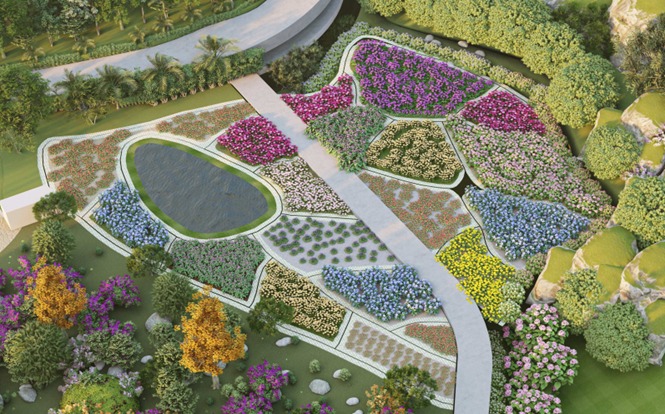
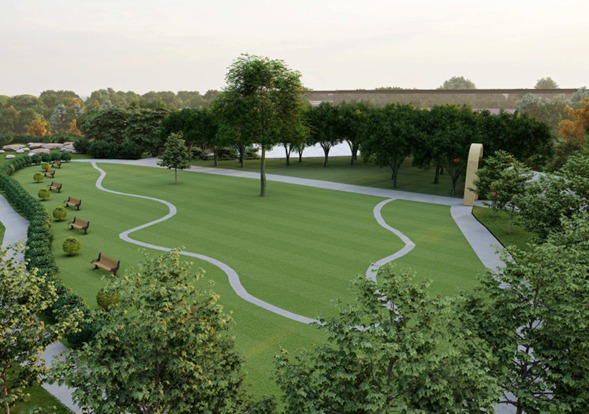
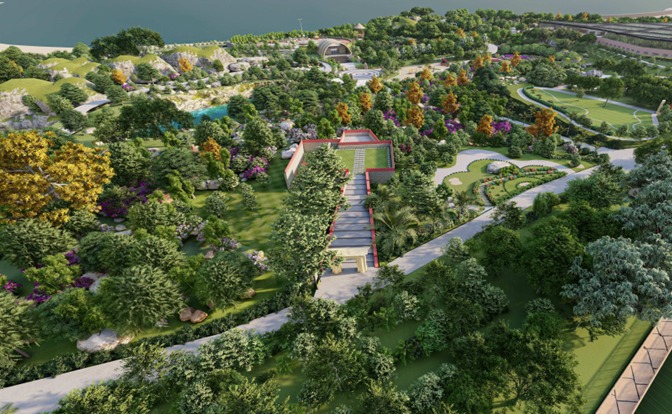
- Integrated Development: The park was implemented as a full-day destination combining an aviary, gardens, boardwalk, pathways, rock gardens, and visitor amenities.
- Ecological Enhancement: A total of 7,81,801 plants were introduced across different landscape zones, strengthening green cover, biodiversity, and habitat value.
- Signature Aviary: A 4.8-acre walk-through aviary was developed with diverse microclimates, vegetation, water bodies, nesting habitats, and care facilities.
- Landscape-Led Approach: Selected a solution that balances conservation, accessibility, recreation, and biodiversity within one integrated public landscape.
Outcomes
- Enhanced Biodiversity: Approximately 7.81 lakh plants were established across diverse thematic gardens, pathways, boardwalks, slopes, and the aviary.
- Eco-Tourism Destination: An integrated 80-acre nature and recreation park was created with multiple attractions and nature-based experiences.
- Flagship Aviary Attraction: The walk-through aviary houses 7,000+ birds across 25 species, attracting approximately 1,050 visitors per day.
- High Visitor Engagement: The park receives an average of 25,000 visitors per week, or approximately 2,000 visitors per day through ticketed entry.
- Conservation & Recreation: The project successfully combines biodiversity conservation, environmental awareness, recreation, and tourism for diverse visitor groups.
Challenges
- Challenging Topography: Steep, rocky, and undulating terrain required careful planning of pathways, terraces, and visitor facilities while retaining the natural character.
- Ecological Sensitivity: Development had to balance extensive visitor infrastructure with the conservation of existing landscape features and the creation of habitat.
- Large-Scale Planting: Establishing and maintaining 7,81,801 plants across diverse landscape zones required careful species selection and phased implementation.
- Aviary Complexity: Creating a 4.8-acre walk-through aviary required specialized habitat design, microclimates, bird nutrition, nesting spaces, and care facilities.
- Accessibility & Connectivity: Connecting the site’s varied levels and attractions required thoughtfully planned pathways and circulation systems across challenging terrain.
SKOCH Award Nominee
Category: State Government – Municipal Administration & Urban Development
Sub-Category: State Government – Municipal Administration & Urban Development
Project: Himayatsagar Eco-Hill Park
Start Date: 3-06-2026
Organisation: Hyderabad Metropolitan Development Authority
Respondent: Rohith Gopidi
https://www.hmda.gov.in/
Level: Premium Plus
Video
See Presentation
Gallery
Case Study
Himayatsagar Eco-Hill Park
Executive Summary
The Himayatsagar Eco-Hill Park, situated near Kothwalguda, Hyderabad, is a landmark eco-tourism and ecological restoration initiative by the Hyderabad Metropolitan Development Authority (HMDA). Spanning 80 acres with an investment of ₹75 crore, the project turned a degraded, rocky quarry landscape into a vibrant, sustainable public green space. Approved in February 2022, the park integrates biodiversity conservation, environmental education, and public recreation, establishing a benchmark for sustainable urban development.
Background & Problem Statement
The project site originally presented severe geological and environmental challenges. Characterized by steep, highly undulating rocky terrain, abandoned quarries, and sparse vegetation, the land suffered from soil erosion and fragmented natural areas. The lack of infrastructure and safe access rendered the location underutilized, depriving the expanding urban populace of accessible green amenities. The key challenge was to restore the site ecologically while converting the complex terrain into an inclusive, visitor-friendly destination without compromising its natural geological identity.
Implemented Strategy & Solution
Under the leadership of the HMDA and its Urban Forestry Wing, a landscape-led, site-sensitive strategy was executed. Instead of leveling the terrain, design plans incorporated the natural topography into the master layout.
Key components of the solution include:
- Ecological Enhancement: Over 7.81 lakh plants, including flowering species, shrubs, and native trees, were planted across dedicated zones.
- Asia’s Largest Walk-Through Aviary: A flagship 4.8-acre facility mimicking natural biotopes with diverse microclimates, water bodies, and integrated bird healthcare facilities.
- Thematic Attractions: Development of a butterfly garden, sensory park, rock garden, boardwalks, open-air theater, and scenic viewpoints.
Key Challenges
- Terrain & Accessibility: Designing safe pathways, circulation systems, and terraces across steep and rocky terrain.
- Specialized Habitat Creation: Replicating specific microclimates and nutritional/nesting environments within the walk-through aviary.
- Large-Scale Planting Logistics: Selecting, establishing, and irrigating nearly 8 lakh plants across diverse soil conditions.
Results & Impact
The initiative delivered notable ecological and social outcomes:
- Biodiversity Restoration: Successfully created an ecological sanctuary with over 7.81 lakh thriving plants.
- Major Tourism & Recreation Hub: Attracts an average of 25,000 visitors per week (around 2,000 daily), establishing a self-sustaining eco-tourism model.
- Conservation Milestone: The aviary hosts thousands of birds across multiple species, supported by dedicated care and quarantine facilities.
Conclusion
Himayatsagar Eco-Hill Park demonstrates how challenging, degraded urban fringes can be regenerated through thoughtful, landscape-led planning. By balancing conservation, accessibility, and public recreation, HMDA has created a replicable model for urban ecological restoration.
For more information, please contact:
Rohith Gopidi at directoruf@gmail.com
(The content on the page is provided by the Exhibitor)