
Cent Grih Laxmi – Housing Loan Scheme for Empowerment of Women – Central Bank of India

Cent Grih Laxmi – Housing Loan Scheme for Empowerment of Women
Problem
- Low property ownership among women: Women often have limited ownership of residential property, restricting long-term financial security and independent asset creation.
- Cultural preference for male ownership: In many rural and semi-urban households, property is traditionally registered in the name of male family members.
- Limited credit history among women: Many women lack an established credit profile, which can affect loan eligibility and result in higher applicable interest rates.
- Affordability of long-term housing finance: Interest costs, margins and processing charges can create financial barriers for women seeking home loans.
- Limited access to formal housing credit: Women, particularly first-time borrowers, have historically been underserved by conventional housing finance products.
Solution
- Concessional housing loan pricing: Cent Grih Laxmi provides women borrowers with a 0.10% interest concession, reducing the cost of long-term housing finance.
- Reduced upfront financial burden: The scheme provides relaxed margins and NIL processing fees, improving affordability and accessibility for eligible women borrowers.
- Women-focused home ownership: Preferential lending terms encourage residential property ownership in women’s names, promoting asset creation and financial security.
- Digital application journey: Applications and tracking were enabled through the Cent Mobile app and website, making the housing loan process more accessible.
- Targeted outreach and partnerships: The Bank used special camps, SHG partnerships, housing developers, state housing boards and dedicated relationship-manager desks to reach women borrowers.
Outcomes
- Expanded women’s home ownership: The scheme enabled women to acquire ownership or co-ownership of residential property, strengthening their asset base and financial security.
- Large beneficiary reach: The initiative reports 54,135 external beneficiaries, demonstrating significant uptake of the women-focused housing loan scheme.
- Reduced interest burden on families: Concessional interest rates and lower charges reduced the overall financial burden associated with long-tenure housing loans.
- Strengthened women empowerment: Ownership of property enhanced women’s financial independence, social security and participation in household decision-making.
- Improved market positioning of the Bank: The women-centric product strengthened Central Bank of India’s housing-loan brand while demonstrating the potential of specialised products for women.
Challenges
- Mandatory property ownership requirement: Eligibility conditions requiring women to be owners or co-owners of the property can restrict participation in some households.
- Deep-rooted cultural practices: Traditional preference for registering property in male names remains a significant obstacle, particularly in rural and semi-urban areas.
- Absence of credit histories: Women without prior borrowing records may face difficulties in credit assessment and may not immediately receive the most favourable pricing.
- Need for sustained awareness: Successful implementation requires continuous staff awareness, marketing and borrower outreach so eligible women understand and access the specialised scheme.
- Operational coordination at scale: Expansion requires branch training, MIS monitoring, stakeholder coordination and periodic modifications to keep the product effective across locations.
Innovation
- Dedicated women-centric housing product: Cent Grih Laxmi differentiates itself from generic housing loans by combining home finance with the objective of women’s asset ownership.
- Integrated package of financial incentives: Interest concessions, reduced margins, NIL processing fees and extended repayment tenure are combined in a single women-focused offering.
- Digital-enabled loan journey: Integration with the Bank’s mobile application and website allows women borrowers to access and track housing loan applications digitally.
- Community and ecosystem-based outreach: Partnerships with women SHGs, housing developers and state housing boards expand reach beyond conventional branch-based sourcing.
- Dedicated support infrastructure for women: Special camps and dedicated RM desks provide focused assistance to women borrowers, combining financial inclusion with customised service delivery.
SKOCH Award Nominee
Category: Banks
Sub-Category: Leadership – Retail Banking
Project: Cent Grih Laxmi – Housing Loan Scheme for Empowerment of Women
Start Date: 4-01-2023
Organisation: Central Bank of India
Respondent: Arvind Kumar
https://centralbank.bank.in/
Level: BFSI – 4
Video
See Presentation
Gallery
Case Study
Cent Grih Laxmi – Housing Loan Scheme for Empowerment of Women – Central Bank of India
Cent Grih Laxmi is a women-focused housing loan initiative of Central Bank of India designed to improve women’s access to formal housing finance and encourage property ownership in their names. Launched from 1 April 2023, the scheme was conceived as a specialised retail banking product that combines financial inclusion with women’s empowerment. The central idea behind the intervention is that home ownership is not merely a housing requirement but also an important source of long-term wealth, social security and economic independence. Recognising that women in India have traditionally had lower levels of property ownership because of affordability constraints, documentation difficulties and social practices, Central Bank of India developed Cent Grih Laxmi to provide preferential housing finance terms to women borrowers and co-borrowers.
The project emerged from the recognition of several barriers faced by women while entering the housing finance market. In many rural and semi-urban areas, residential properties are traditionally registered in the names of male members of the family. This cultural preference limits women’s ability to independently build assets and may also restrict their eligibility for specialised housing finance products that require them to be owners or co-owners. Another important challenge relates to credit history. Many women, particularly those who have historically remained outside formal borrowing systems, may have limited or no credit records. This can affect the assessment of their creditworthiness and make access to favourable lending terms difficult. The scheme was therefore developed to address not only financial constraints but also broader barriers to women’s participation in formal housing credit.
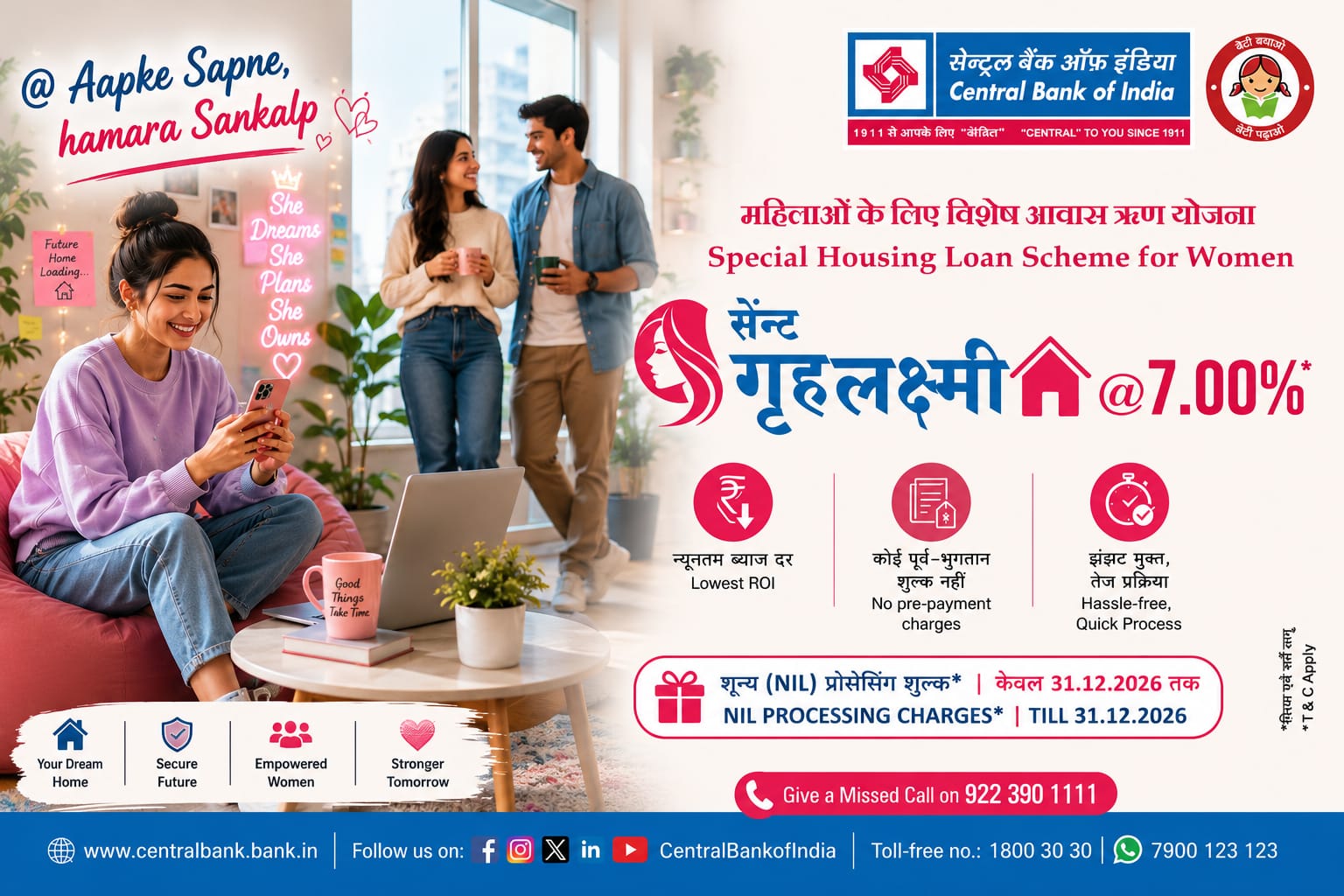
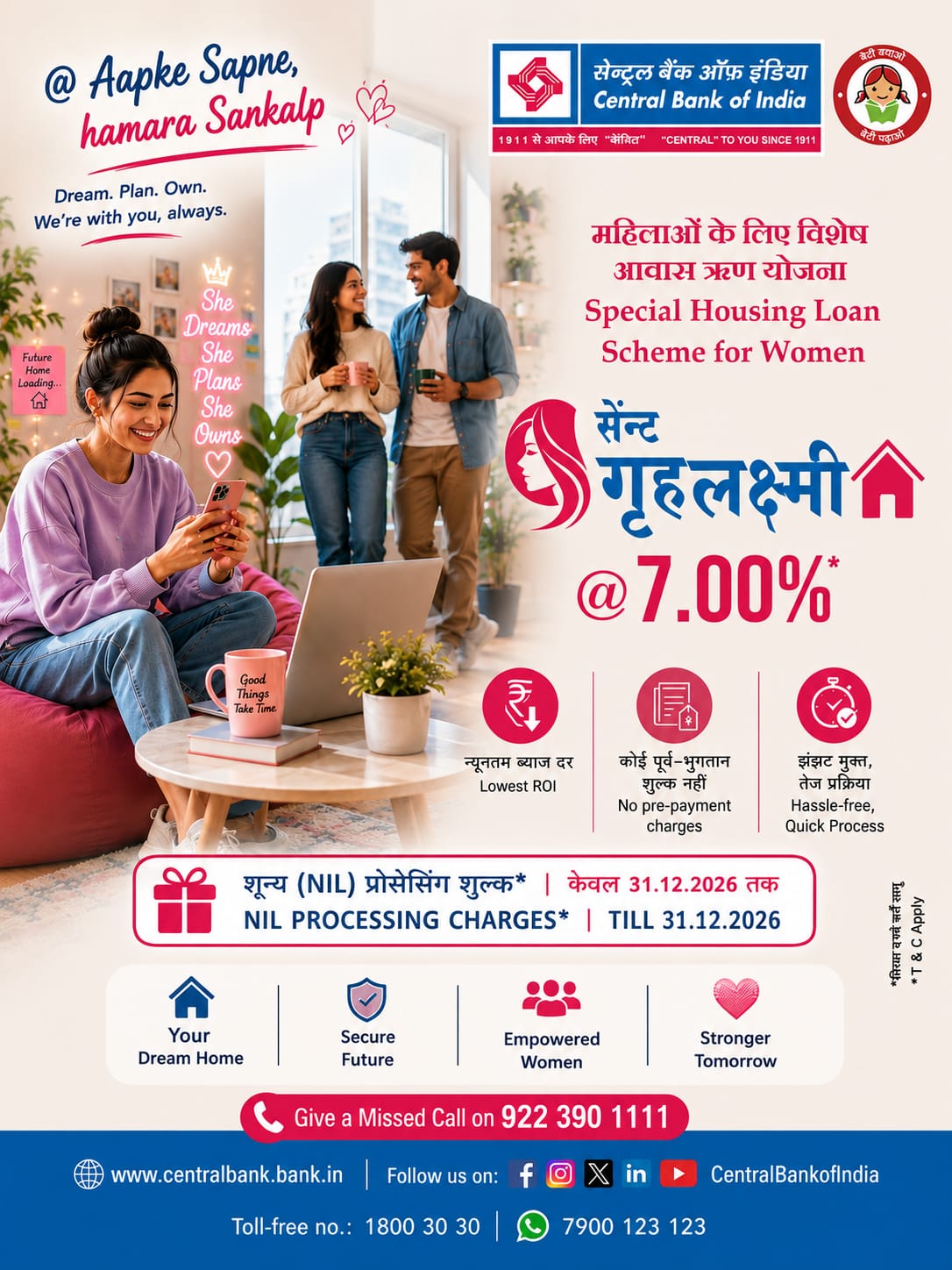
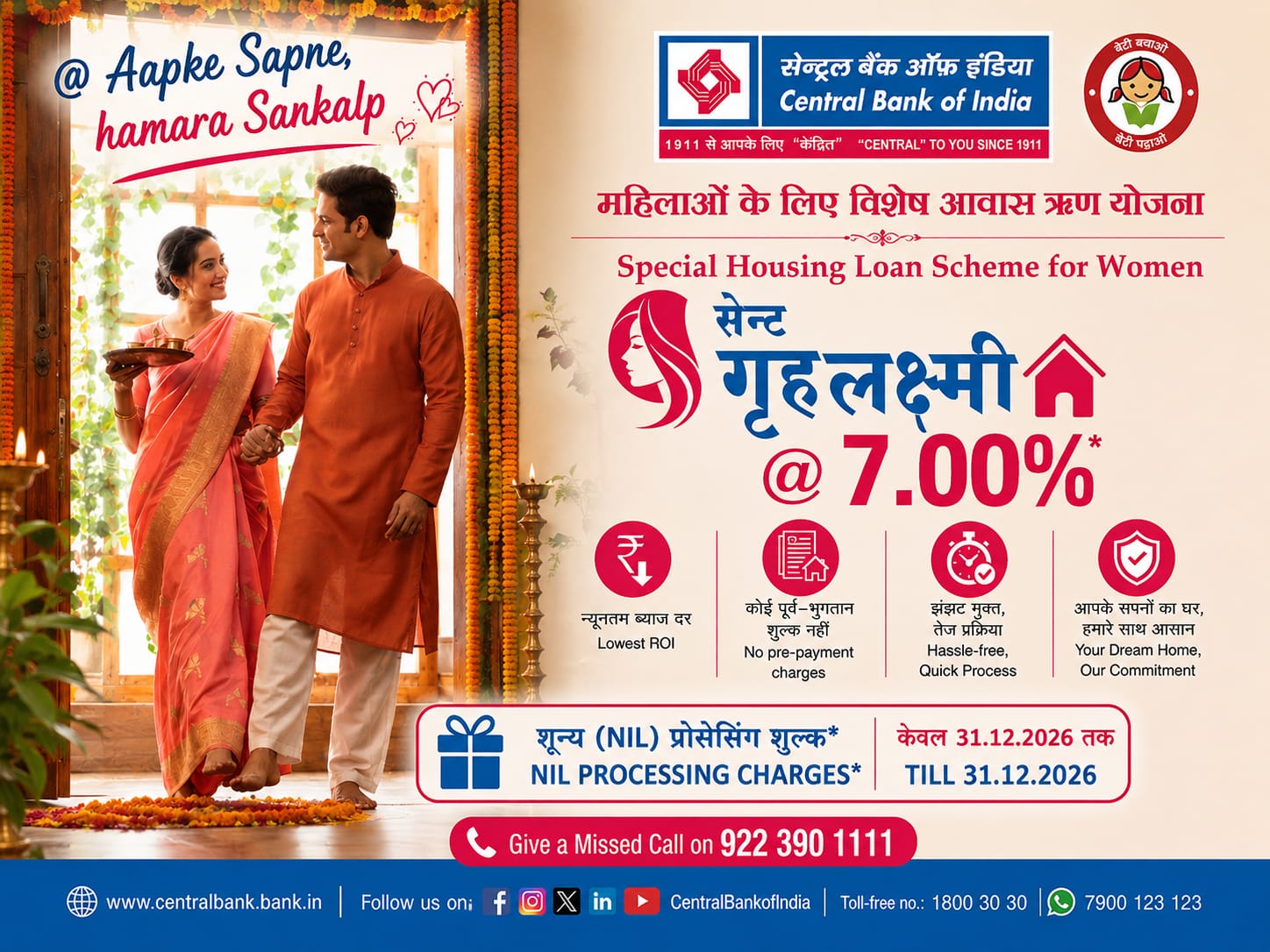
Cent Grih Laxmi addresses these barriers through a package of preferential financial conditions specifically targeted at women. The scheme offers concessional interest rates, relaxed margins, waiver of processing fees and extended repayment tenure for eligible women borrowers or co-borrowers. At the time of launch, the Bank introduced an interest concession of 0.10 per cent, or 10 basis points lower interest rate for women, together with reduced margin requirements and NIL processing fees. The combination of these concessions is important because the affordability of a housing loan depends not only on the headline interest rate but also on upfront contributions, fees and the repayment period. By reducing these costs, the Bank sought to make formal housing finance more accessible while encouraging families to register property in the name of women.
The implementation of the scheme followed a phased approach. During the second quarter of FY 2023-24, the product was conceptualised following market research into women’s housing needs, after which the necessary approval was obtained. In the third quarter of FY 2023-24, Cent Grih Laxmi was launched with the concessional interest rate, reduced margin and waiver of processing charges. During FY 2024-25, the Bank strengthened the initiative by enabling a digital journey through its Cent Mobile application and website, allowing customers to engage with the loan application and tracking process digitally. Partnerships were also developed with women’s Self-Help Groups and housing developers to expand outreach. During FY 2025-26, the scheme was further scaled through special camps, tie-ups with state housing boards and dedicated relationship manager desks for women borrowers.
Operationally, the success of the initiative required more than the introduction of a new loan product. The Bank emphasised scheme rollout, staff awareness, marketing, reduction in turnaround time and stability of the product. Branch training was particularly important because frontline staff needed to understand the eligibility conditions, financial concessions and broader purpose of the initiative. The implementation structure also involved the creation of online leads, regular modifications to the scheme where required, MIS monitoring and coordination with relevant stakeholders. These efforts helped integrate the product with the Bank’s wider retail lending operations rather than treating it as an isolated financial product.
The project was guided by a combination of social, financial and business objectives. One of the principal objectives was financial inclusion by reaching women who had previously been excluded from formal housing credit. A second objective was social impact, particularly through property ownership in women’s names, which can contribute to long-term security and empowerment. The Bank also viewed the initiative as commercially viable because the nomination notes that women borrowers demonstrate better repayment discipline and lower non-performing asset rates. At the policy level, Cent Grih Laxmi was positioned as supporting wider government priorities such as PMAY, Nari Shakti and the financial inclusion agenda. The Bank also viewed the specialised product as a means of creating a competitive advantage by providing tangible benefits beyond those available under generic housing loans.
A significant feature of Cent Grih Laxmi is its attempt to link women’s empowerment directly with asset ownership. Financial inclusion initiatives often focus primarily on access to bank accounts, savings or small-ticket credit. In this case, the intervention extends the concept of inclusion to a high-value, long-term household asset. Home ownership can strengthen a woman’s financial position, provide security for the family and improve her participation in household economic decisions. The nomination specifically identifies property ownership as a mechanism for improving women’s financial independence and inter-generational security. In this sense, the scheme seeks to create an outcome that continues beyond the loan transaction itself by facilitating ownership of an appreciating and socially significant asset.
The project has reported considerable outreach. According to the nomination, Cent Grih Laxmi has reached 54,135 external beneficiaries during the evaluation period. The reported outcomes include greater property ownership among women, relief to families through lower interest costs and improvement in the Bank’s image in the housing finance market. The initiative has also demonstrated the market potential of women-centric financial products. By developing a specialised offering rather than applying a uniform housing loan framework to all borrowers, the Bank has attempted to respond to the specific financial and social circumstances affecting women’s access to housing finance.
Despite the progress, implementation has faced important challenges. Mandatory property ownership or co-ownership can itself become an eligibility barrier where families remain reluctant to register assets in women’s names. Cultural norms favouring male ownership continue to be particularly relevant in rural and semi-urban areas. Limited credit histories among women also remain a constraint, especially for first-time borrowers who may not have previously accessed formal credit. These challenges demonstrate that concessional finance alone cannot completely overcome structural and behavioural barriers. Successful expansion therefore requires continued awareness building among borrowers, branch-level engagement and outreach through local networks and institutional partnerships.
The innovative character of Cent Grih Laxmi lies in the combination of targeted pricing, women-centred ownership, digital access and ecosystem-based outreach. The product brings together interest concessions, lower margins, NIL processing fees and extended repayment conditions within a dedicated housing finance proposition for women. Its implementation has been supported by digital application tracking, Self-Help Group partnerships, housing developers, state housing boards, special camps and dedicated relationship management support. Instead of relying exclusively on conventional branch-based lending, this combination creates multiple channels through which eligible women can be identified, informed and supported through the borrowing process.
Overall, Cent Grih Laxmi illustrates how a mainstream banking product can be redesigned to pursue both commercial and social objectives. By encouraging property ownership among women while simultaneously expanding the Bank’s retail housing portfolio, the initiative creates a connection between financial inclusion, women’s empowerment and business development. The experience also suggests that specialised products can help financial institutions reach segments whose needs may not be adequately addressed through standard lending frameworks. The nomination reflects the broader lesson that a carefully designed product, supported by concessions, digital delivery, staff capacity and focused outreach, can influence both customer behaviour and market positioning. Cent Grih Laxmi therefore represents an effort by Central Bank of India to use housing finance as an instrument for strengthening women’s ownership of productive household assets while expanding formal credit access across a large beneficiary base.
For more information, please contact:
Arvind Kumar at gmretail@centralbank.bank.in
(The content on the page is provided by the Exhibitor)