PM Krishak Mitra Surya Mitra Yojana – Central Bank of India

PM Krishak Mitra Surya Mitra Yojana
Problem
- Slow, paper-based loan processing caused delays and required substantial manual intervention in sanctioning and disbursement.
- Dependence on diesel pumps and unreliable electricity increased farmers’ operating costs and contributed to carbon emissions.
- Low penetration of green finance limited farmers’ access to financing for renewable-energy-based agricultural infrastructure.
- High turnaround time for agricultural loans delayed access to finance for installing solar irrigation pumps.
- Limited adoption of renewable energy in agriculture created the need to align agricultural financing with government clean-energy objectives.
Solution
- Digital Lending Platform integration enabled end-to-end digital processing of loans under PM Krishak Mitra Surya Mitra Yojana.
- Paperless electronic applications were introduced with auto-filled customer information wherever available, reducing paperwork and manual data entry.
- Digital identity verification through Aadhaar validation, CKYC integration and online document uploads simplified customer onboarding.
- Automated eligibility assessment used predefined rules to verify borrower profiles, landholding, repayment capacity and scheme requirements.
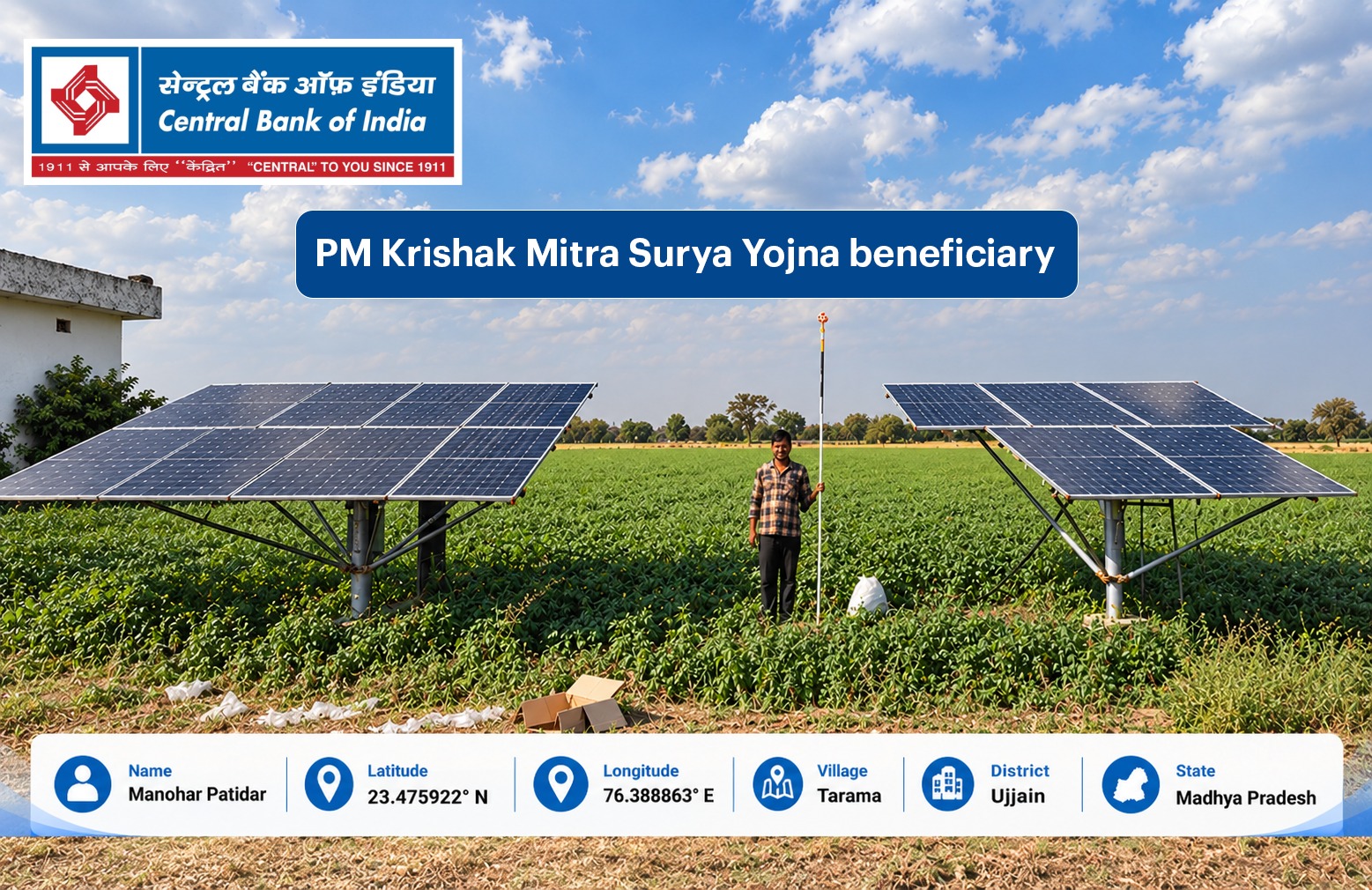
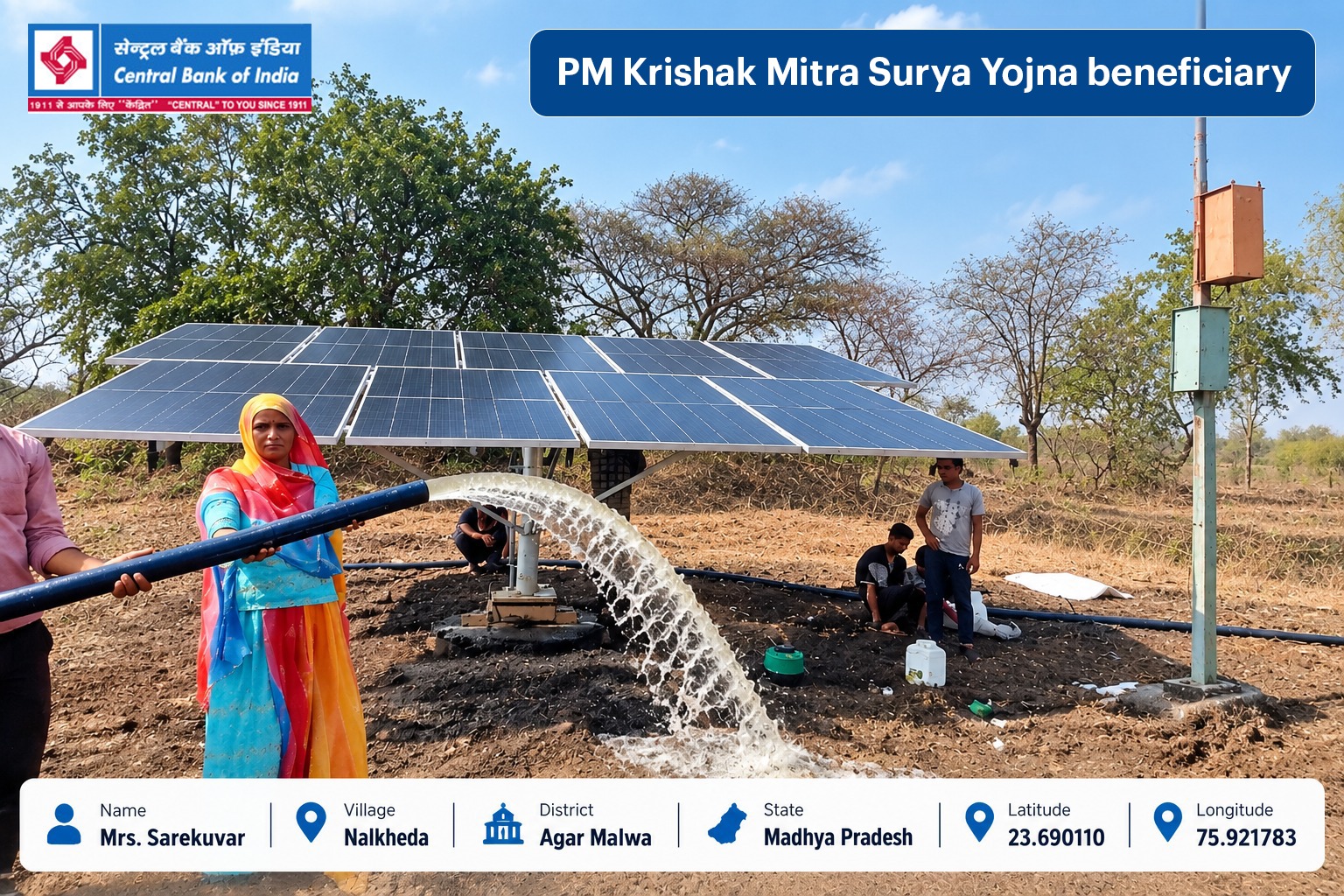
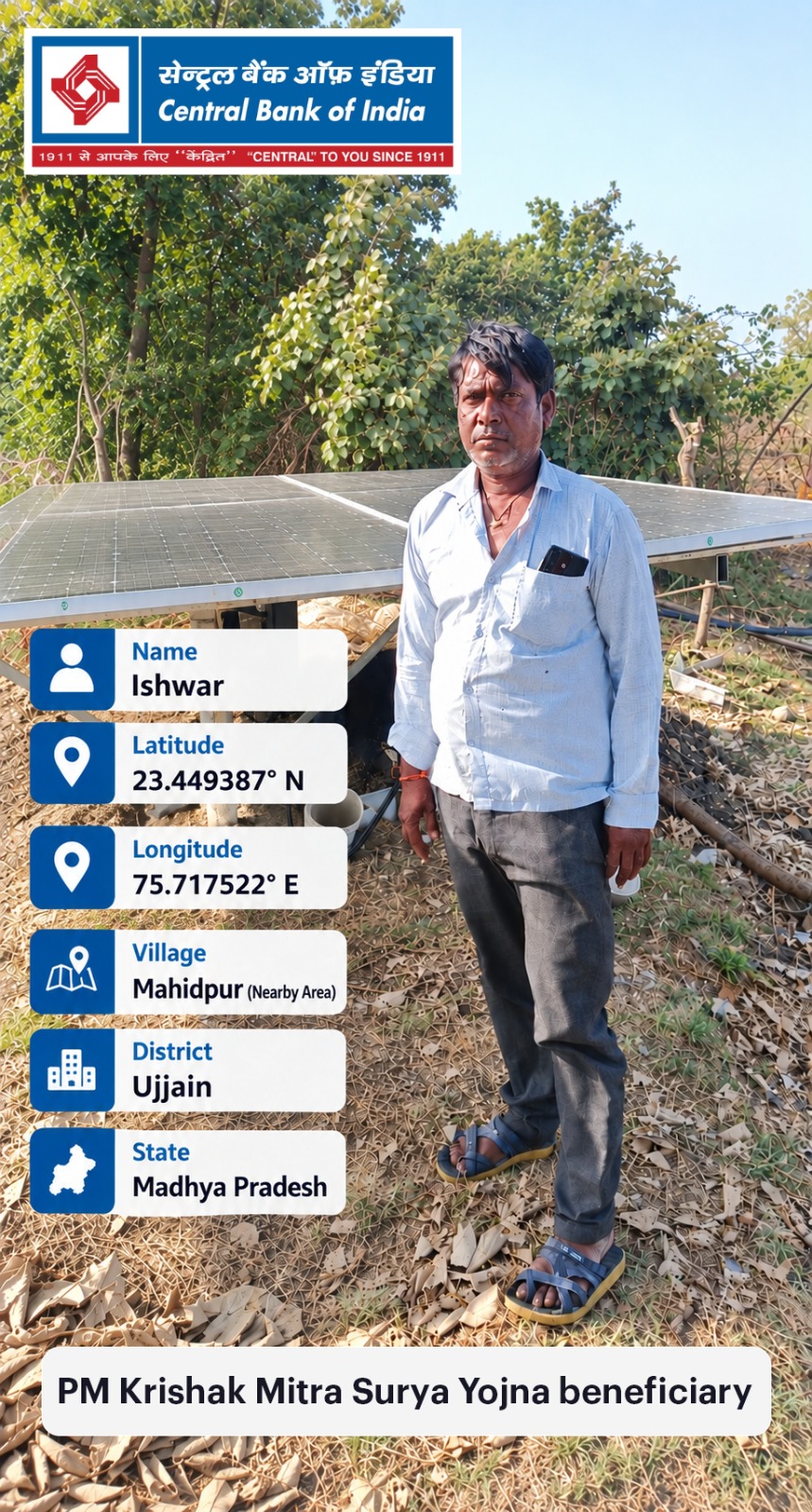
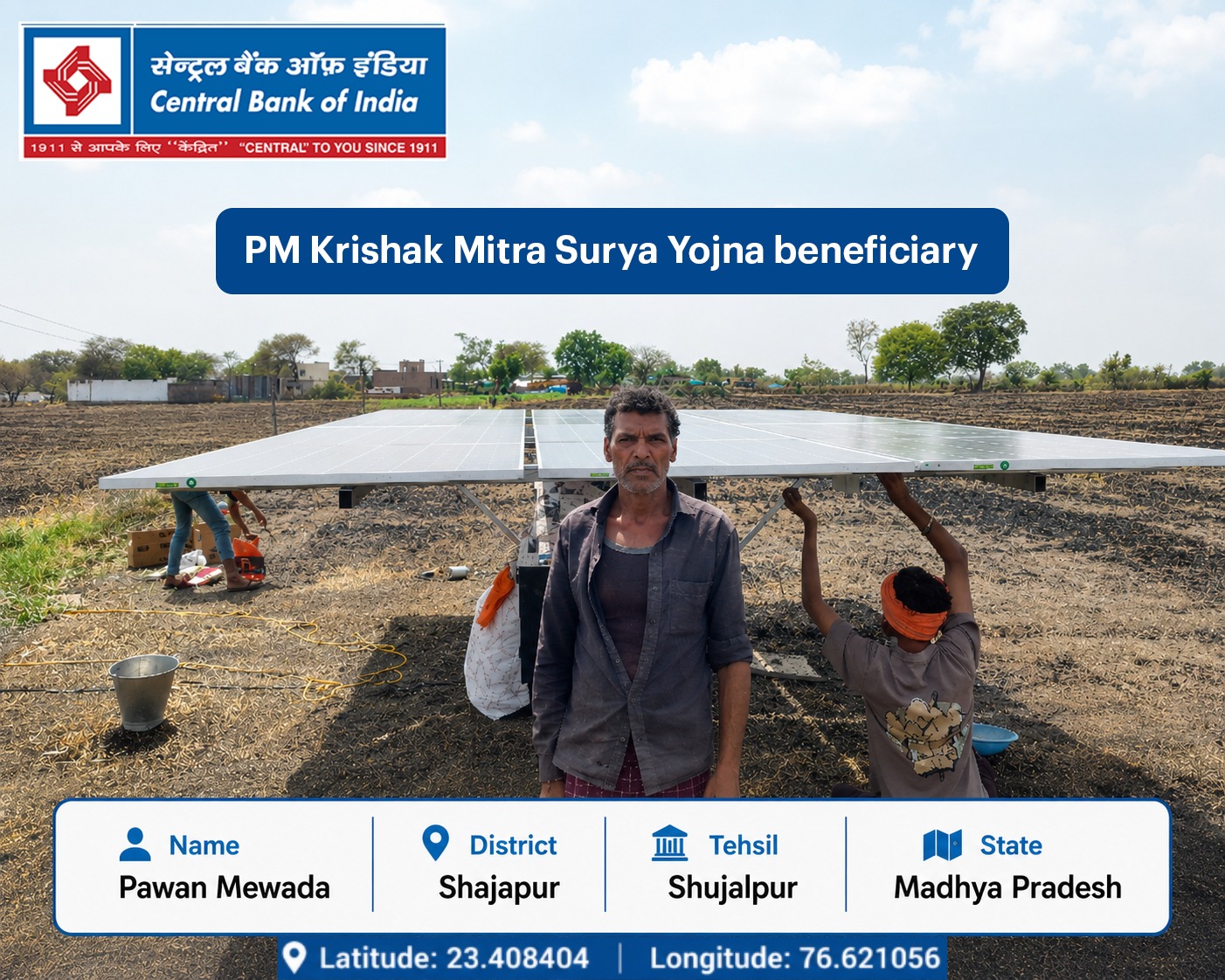
- Digital post-installation verification enabled uploading of geo-tagged photographs and installation documents for monitoring financed solar pumps.
Outcomes
- Turnaround time reduced significantly through automated workflows and digital verification from application to sanction.
- Uniform appraisal methodology improved consistency in lending decisions and compliance across bank branches.
- System-based validations strengthened credit quality while reducing operational and documentation risks.
- Small and marginal farmers gained timely formal credit, reducing their dependence on informal financing sources.
- Financial inclusion expanded by improving institutional credit access for farmers in rural and semi-urban areas.
Innovation
- Limited digital literacy among farmers meant many applicants required assistance to complete digital loan applications.
- Low familiarity with smartphones, e-KYC and digital uploads created difficulties during the application process.
- Incomplete or poor-quality document uploads resulted in processing delays and additional verification requirements.
- Preference for physical banking interactions made some farmers hesitant to adopt a fully digital loan journey.
- Weak internet connectivity in rural locations affected real-time processing, document uploads and digital verification.
Challenges
- End-to-end digital lending journey: Farmers can apply for solar-pump financing without needing to visit a bank branch.
- Government-bank platform integration: The Bank’s DLP is integrated with the MPUVNL ecosystem for seamless transmission and processing of applications.
- Automated beneficiary and eligibility verification: Digital validation helps verify borrower eligibility and reduces duplication, errors and potential misuse of funds.
- Geo-tagged post-installation verification: Solar-pump installation is digitally validated through installation reports and geo-tagged photographs.
- Green finance combined with financial inclusion: The platform links renewable-energy financing with easier formal credit access for small and marginal farmers.
SKOCH Award Nominee
Category: Banks
Sub-Category: Leadership – Green Finance
Project: PM Krishak Mitra Surya Mitra Yojana
Start Date: 2-08-2025
Organisation: Central Bank of India
Respondent: Rohit Kumar
https://centralbank.bank.in/
Level: BFSI – 4
Video
See Presentation
Gallery
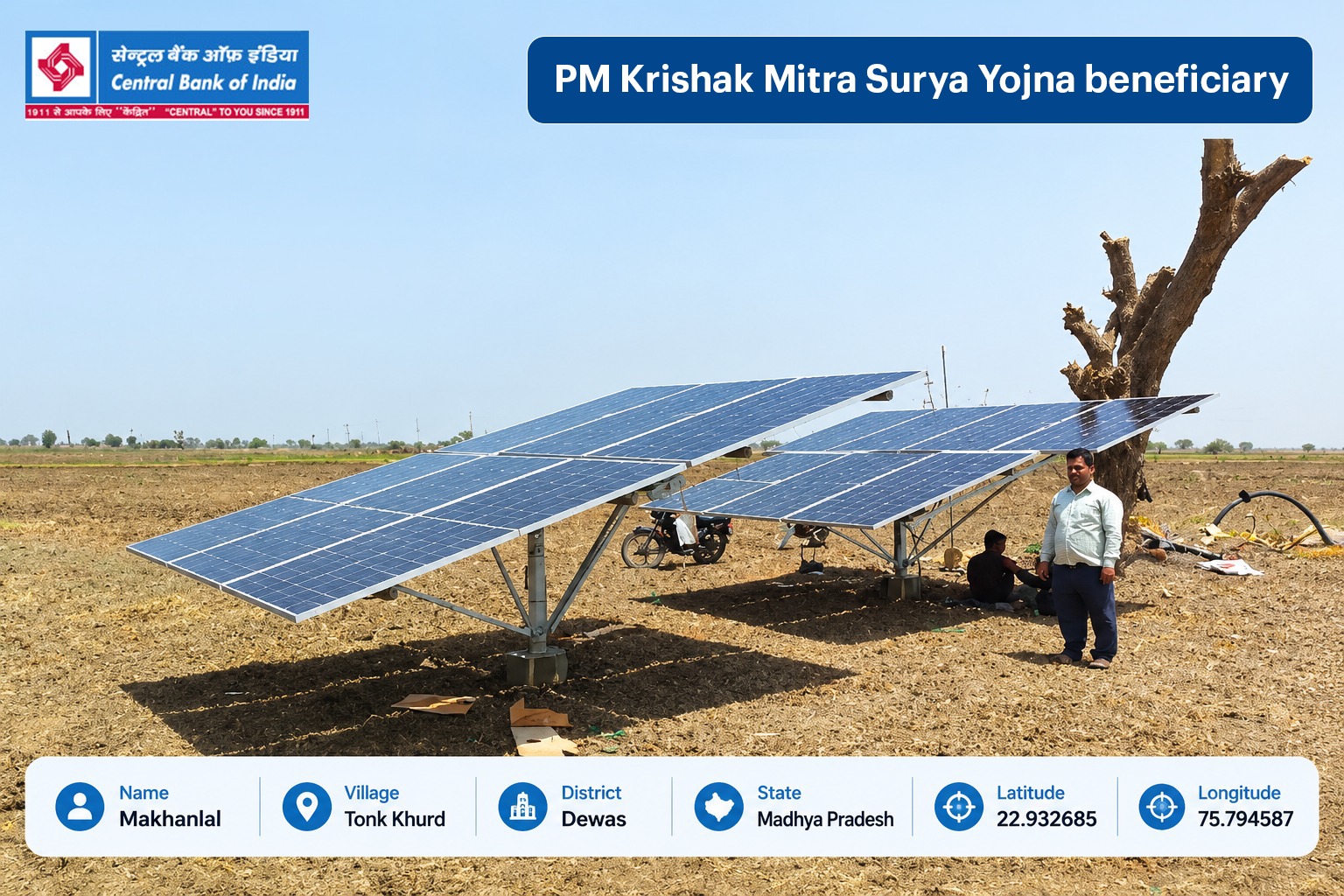
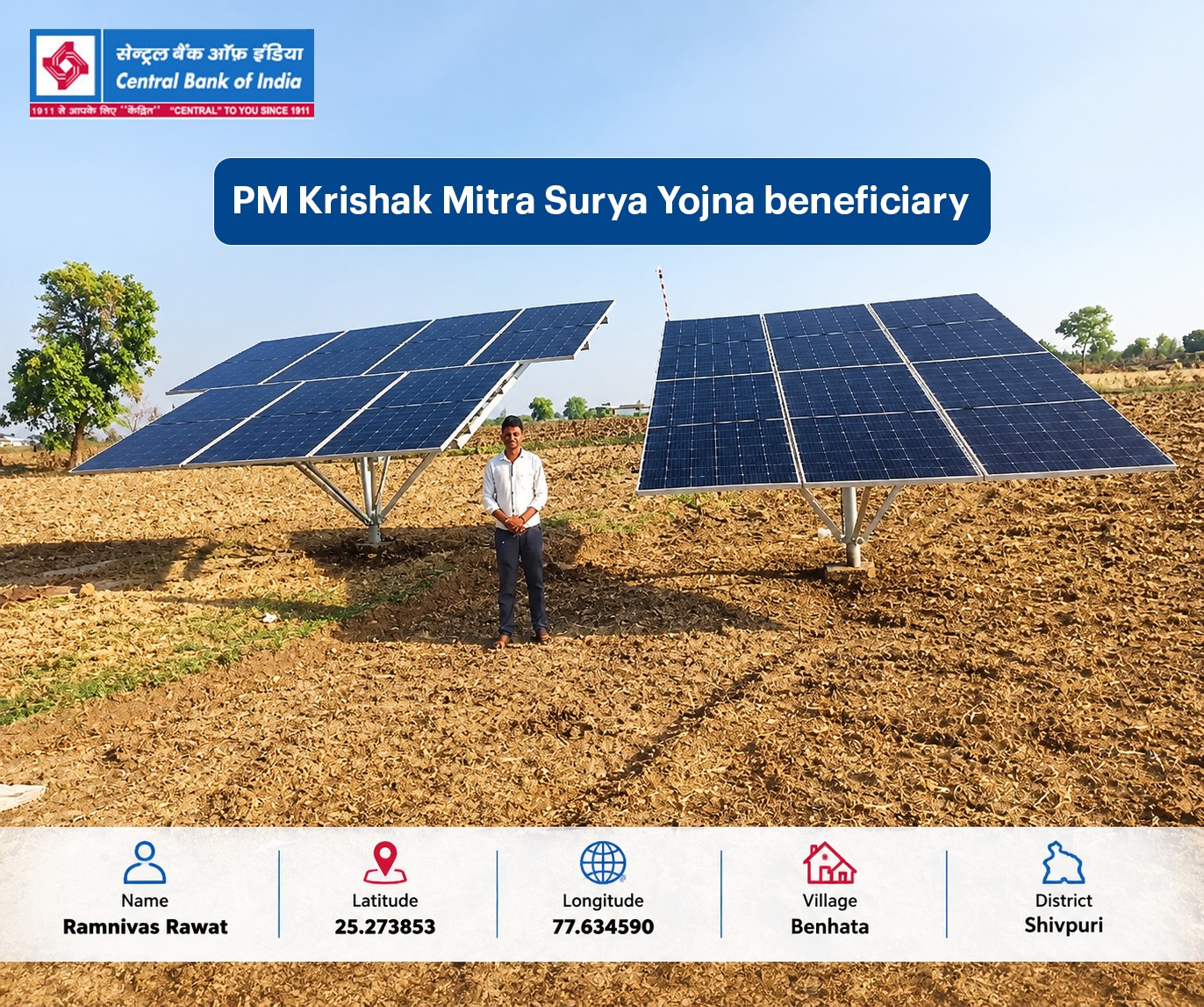
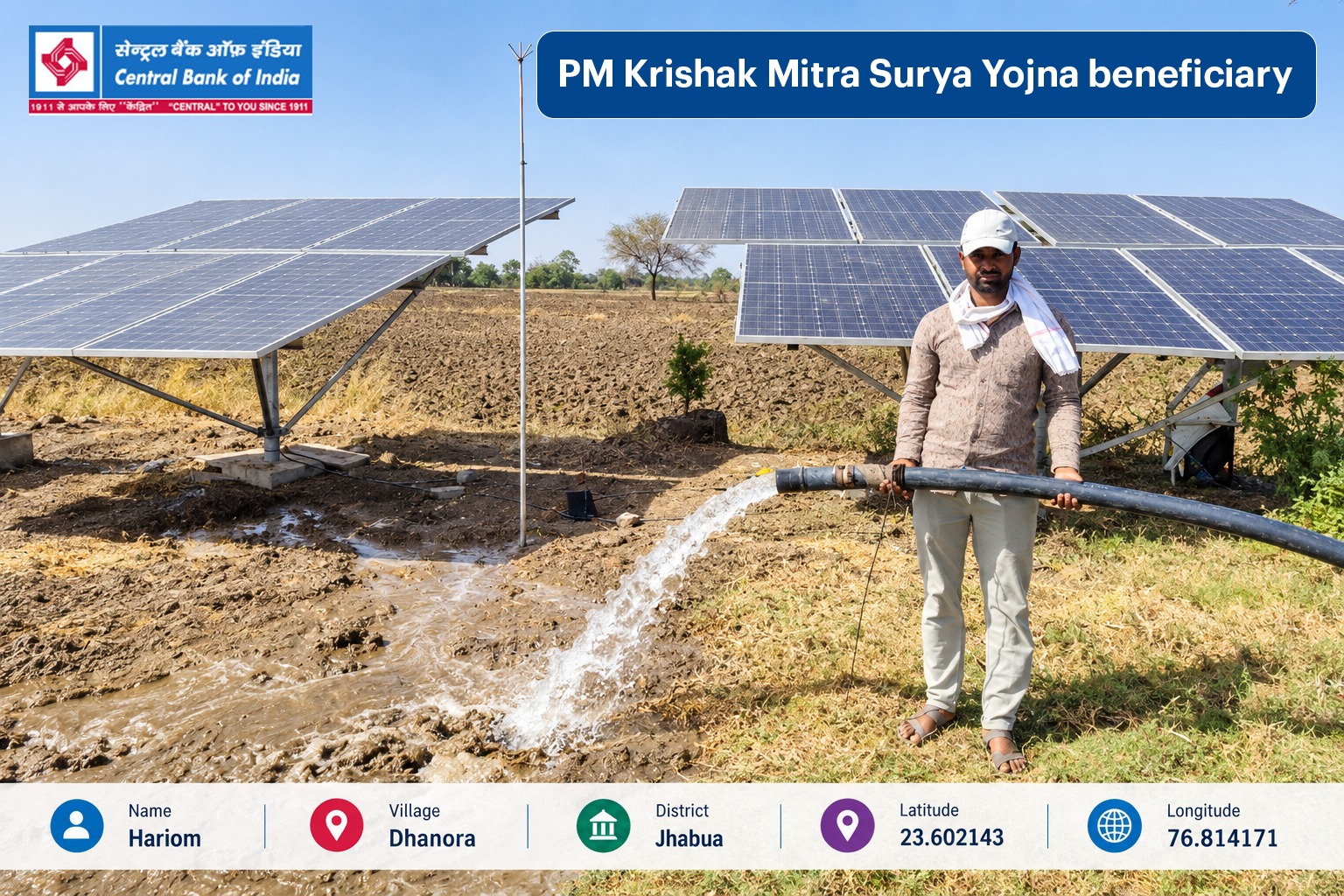
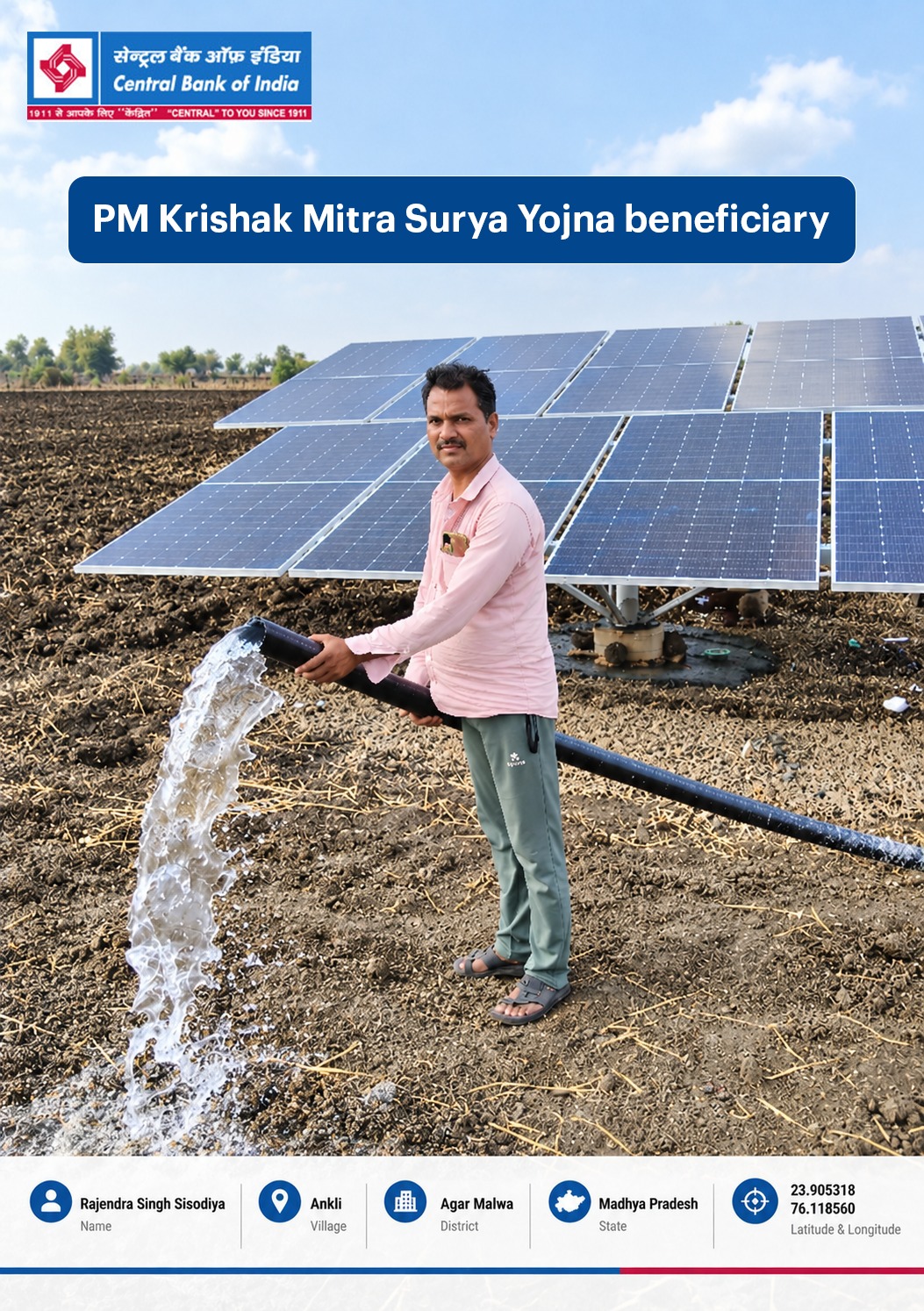
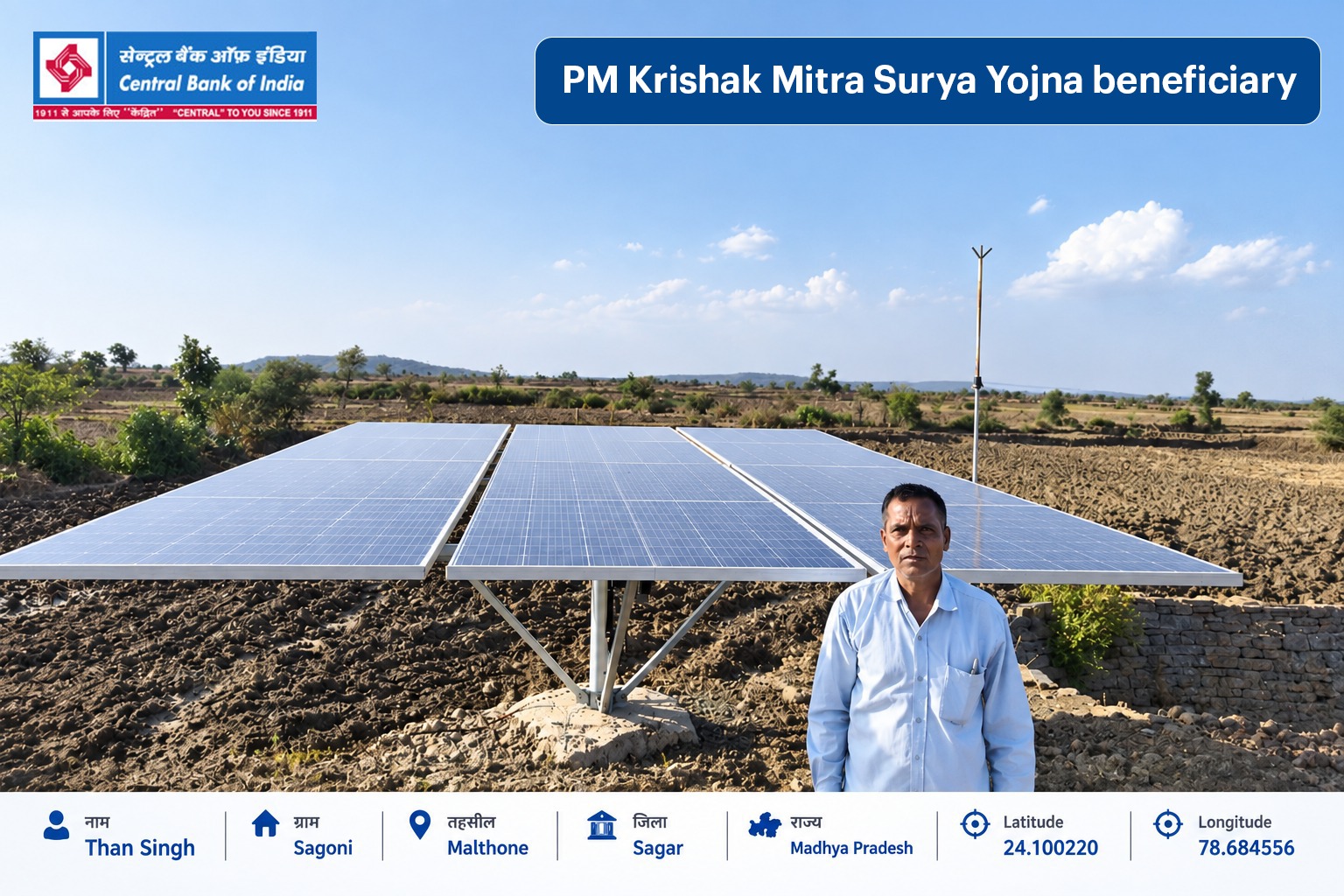
Case Study
PM Krishak Mitra Surya Mitra Yojana – Central Bank of India
The PM Krishak Mitra Surya Mitra Yojana represents an important initiative by the Central Bank of India to combine agricultural finance, renewable energy and digital lending into a single integrated framework. Implemented in Madhya Pradesh in association with the Madhya Pradesh Urja Vikas Nigam Limited, the initiative is aligned with the objectives of the national PM-KUSUM Component-B programme for installation of standalone solar irrigation pumps. The project seeks to improve farmers’ access to affordable institutional finance while encouraging a transition from conventional energy sources towards solar-powered irrigation. Central Bank of India has operationalised the financing mechanism through its Digital Lending Platform, creating an end-to-end digital loan journey for eligible farmers. The initiative therefore brings together green finance, agricultural productivity, financial inclusion and digital transformation in banking.
Agricultural irrigation has traditionally depended considerably on diesel pumps or electricity connections, both of which can impose limitations on farmers. Diesel-powered irrigation creates recurring fuel expenses and contributes to carbon emissions, while unreliable electricity availability can affect timely irrigation. At the same time, access to financing for renewable-energy infrastructure has remained limited, particularly for small and marginal farmers. Conventional agricultural loan processing also often involves extensive paperwork, branch visits, documentation and manual verification. These processes can increase turnaround time and make formal credit relatively difficult to access for farmers located in rural areas. The project was designed to address these interconnected challenges by providing financing for solar irrigation while simplifying the lending process through digital technology.
The core objective of the intervention is to facilitate access to affordable institutional finance for solar-powered agricultural and allied infrastructure. By financing solar irrigation systems, the scheme seeks to help farmers reduce their dependence on conventional sources of energy while potentially improving the economics of agricultural operations. Another objective is to increase the sanction and disbursement of agriculture loans for solar pumps, feeder solarisation and other eligible projects covered under government programmes. The project also promotes clean-energy adoption in agriculture, simplifies loan processing through paperless workflows and faster sanctions, and seeks to bring small and marginal farmers more effectively into the formal banking system. These objectives demonstrate that the programme is not merely a lending product but also an instrument for advancing financial inclusion and sustainable agriculture.
A key feature of the project is the integration of the government ecosystem with the Bank’s Digital Lending Platform. The state government uploads the database of eligible or temporarily connected farmers on the relevant portal. A farmer accesses the portal and completes electronic Know Your Customer verification. The system matches the applicant’s name with the existing beneficiary database and assesses eligibility for further processing. The applicant then fills in the required information and uploads the Detailed Project Report. The application subsequently moves through the linked Agriculture Infrastructure Fund and MPUVNL ecosystem before reaching the Central Bank of India’s Digital Lending Platform. The Bank conducts its eligibility assessment and, when requirements are fulfilled, provides sanction through the digital system. This interconnected architecture reduces the need for fragmented and repetitive physical processes.
The Digital Lending Platform itself incorporates several process innovations. The PM Krishak Mitra product has been configured with predefined eligibility conditions, loan parameters, applicable interest rates, subsidy provisions and documentation requirements. Loan applications can be generated electronically, with customer information automatically populated wherever available. Identity and address verification are undertaken digitally through Aadhaar validation, CKYC integration and electronic document uploads. The platform uses an automated rule engine to assess borrower profiles, landholdings, repayment capacity and relevant scheme norms. Required documents are uploaded electronically, and once the solar pump is installed, geo-tagged photographs can be submitted as part of post-installation verification. Together, these features create a substantially paperless lending and monitoring process.
The digital approach also improves coordination and transparency among multiple stakeholders. Traditional loan processing can involve several documents, manual validations and interaction among farmers, bank branches, government departments and vendors. Under the new process, digital validation of beneficiary details and subsidy status helps reduce documentation errors, duplicate financing and the possibility of misappropriation. Farmers are also able to complete much of the loan journey without repeatedly visiting a branch. Once the Bank sanctions a loan, information can be communicated to the concerned vendor, who proceeds with installation of the solar pump. After installation, an installation report and geo-tagged photograph are recorded as part of the post-inspection process. This digital trail improves visibility across different stages of implementation and enhances accountability.
Implementation, however, has involved significant challenges, particularly because the beneficiaries include rural farmers with varying levels of familiarity with digital platforms. Many farmers were unfamiliar with online loan applications and required assistance. Limited experience in using smartphones, completing e-KYC procedures and uploading digital documents could create difficulties during onboarding. In some cases, incomplete or poor-quality documents led to processing delays. A section of customers continued to prefer face-to-face interaction with bank officials and remained hesitant about submitting applications digitally. In addition, poor internet connectivity in some rural areas affected real-time processing and document uploads. These constraints demonstrate that technology-led financial inclusion requires not only a strong digital platform but also user support, digital literacy and reliable connectivity.
The project also faces dependencies that extend beyond the direct control of the Bank. Progress can depend on vendors, electricity distribution companies, solar installers, state departments and subsidy approvals. Farmers in remote locations may face delays in site inspections, geo-tagging and technical verification. Problems with land records, Aadhaar linkages, income documentation or ownership proofs may require corrections before a loan can move forward. These factors highlight the complexity of creating a fully integrated digital ecosystem involving multiple government and private actors. At the same time, they provide lessons for strengthening coordination, simplifying data verification and improving support mechanisms for beneficiaries who are unable to navigate digital systems independently.
The outcomes reported by the Bank demonstrate important improvements in the lending process. Automated workflows and digital verification have significantly reduced turnaround time between application and sanction. A uniform appraisal methodology across branches has improved consistency in lending decisions and adherence to policy guidelines. System-based validation and eligibility checks have also helped improve credit quality while reducing operational and documentation risks. More importantly, the platform is designed to provide timely access to formal institutional credit to farmers, including small and marginal farmers who might otherwise depend upon informal financing sources. By expanding access to agricultural credit in rural and semi-urban areas, the initiative contributes to broader financial inclusion alongside the promotion of renewable energy.
The scale of the potential beneficiary base further strengthens the significance of the intervention. The nomination identifies 33,573 external beneficiaries and 100 internal beneficiaries. The project has initially been implemented in Madhya Pradesh, while the Bank has also discussed the solution with other states, including Gujarat and Bihar, which have shown interest. This creates the possibility of replicating the model in other geographies where governments are promoting solarisation of agriculture. Because the underlying Digital Lending Platform can standardise eligibility, documentation, verification and appraisal processes, the architecture has the potential to support wider adoption with appropriate state-level integration.
Overall, PM Krishak Mitra Surya Mitra Yojana illustrates how digital banking can be used to advance both developmental and environmental objectives. By linking government beneficiary databases, renewable-energy programmes, digital verification, automated lending rules and post-installation monitoring, Central Bank of India has created a financing model focused on ease of access for farmers. The intervention strengthens the Bank’s digital transformation agenda while promoting technology-driven agricultural lending and clean-energy adoption. Farmers gain a more transparent and paperless loan journey, while the Bank benefits from standardised appraisal and improved verification. The project therefore demonstrates how green finance can move beyond conventional lending to become a tool for agricultural modernisation, financial inclusion and sustainable development.
For more information, please contact:
Rohit Kumar at gmsocialbanking@centralbank.bank.in
(The content on the page is provided by the Exhibitor)