
Retail Lending Growth – Union Bank of India

Retail Lending Growth
Problem
- Intense competition in retail lending with pressure on interest rates, fees, and turnaround time (TAT) across the industry
- Fragmented loan processing at the branch level leads to delays, inconsistent decisions, and higher customer drop-offs
- Need to balance rapid retail credit growth with asset quality, risk management, and compliance
- Limited digital penetration in certain retail loan products, increasing operational dependency on physical branches
- Rising borrower expectations for seamless, end-to-end digital and single-point loan fulfilment
Solution
- Centralised Retail Loan Points (RLPs) with higher delegation to enable single-point sanction and disbursement
- Creation of CRLC-I and CRLC-II committees for faster approval of high-value and deviation cases
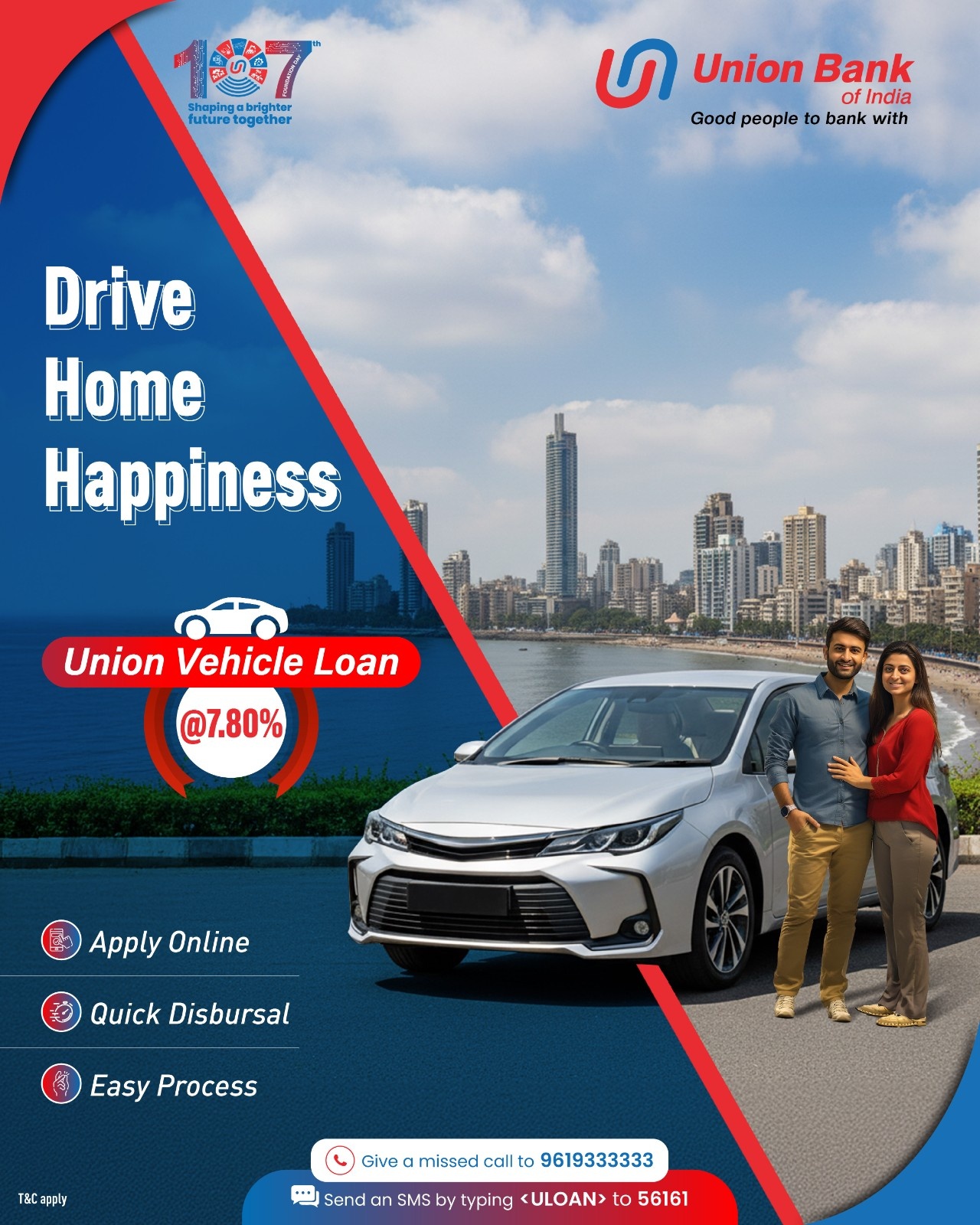
- Launch of fully digital Personal Loan, Vehicle Loan, and Roof Top Solar Loan journeys
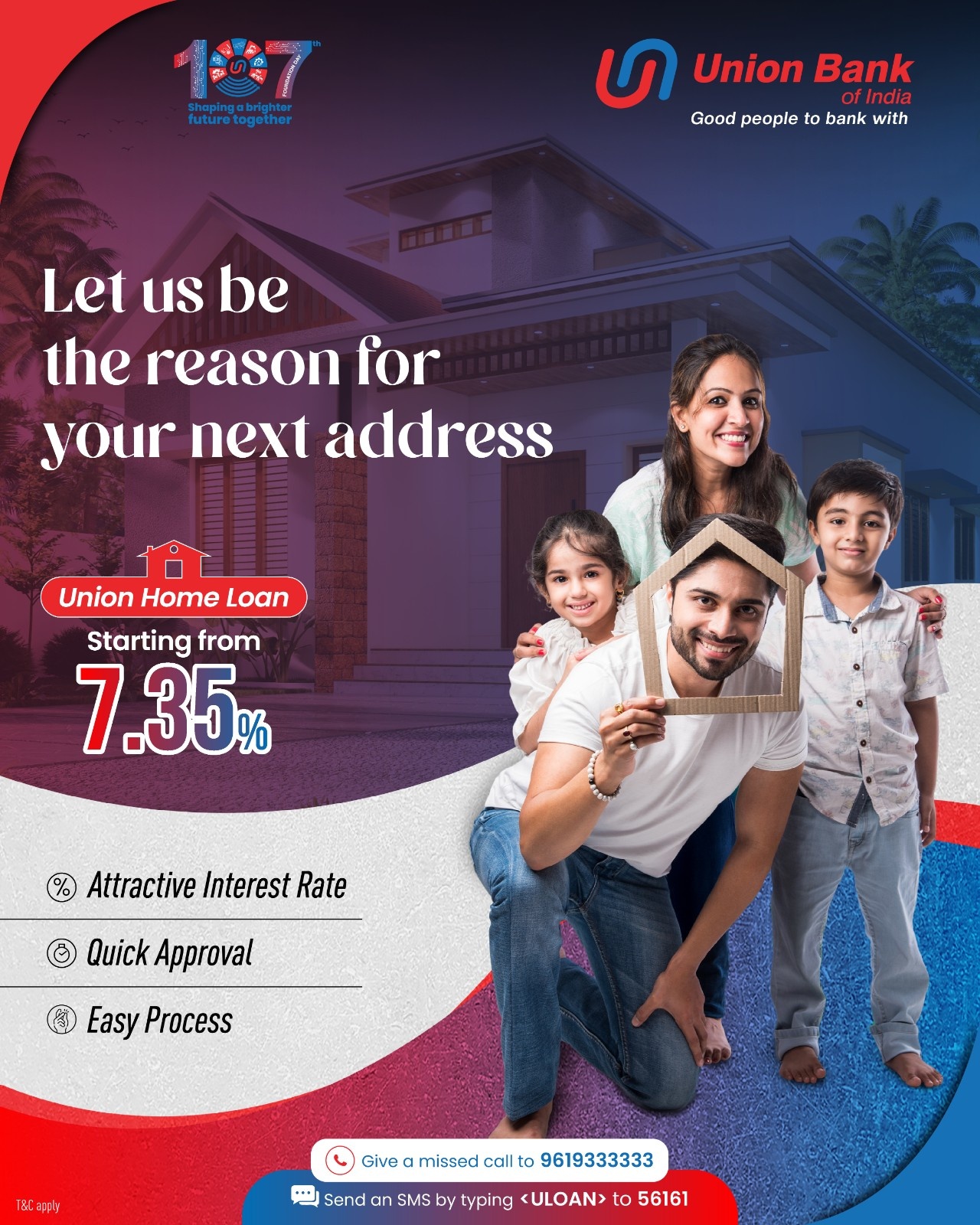
- Introduction of Business Retention Discount (BRD) to prevent home loan takeovers
- Festive processing fee waivers and simplified documentation to improve customer acquisition
Outcomes
- Retail loan growth surpassed industry growth during FY 2024–25 and continued momentum till Sept 2025
- Increasing share of retail loans in total advances, strengthening portfolio diversification
- Reduction in Retail NPA by ~1.22% and stress portfolio decline from 9.13% to 6.95%
- The education loan portfolio more than doubled within two years, reaching ₹15,209 crore
- Improved turnaround time (TAT) and positive feedback from field functionaries and customers
Challenges
- Maintaining underwriting quality while scaling retail lending volumes rapidly
- Accurate income assessment and repayment capacity evaluation in mass retail segments
- Managing borrower credit discipline, especially in unsecured and semi-secured products
- Designing EMI structures aligned with real income patterns to prevent future stress
- Educating borrowers on credit behaviour, interest rate changes, and repayment responsibilities
Innovations
- Centralised RLP model with empowered sanctioning to drastically reduce loan processing time
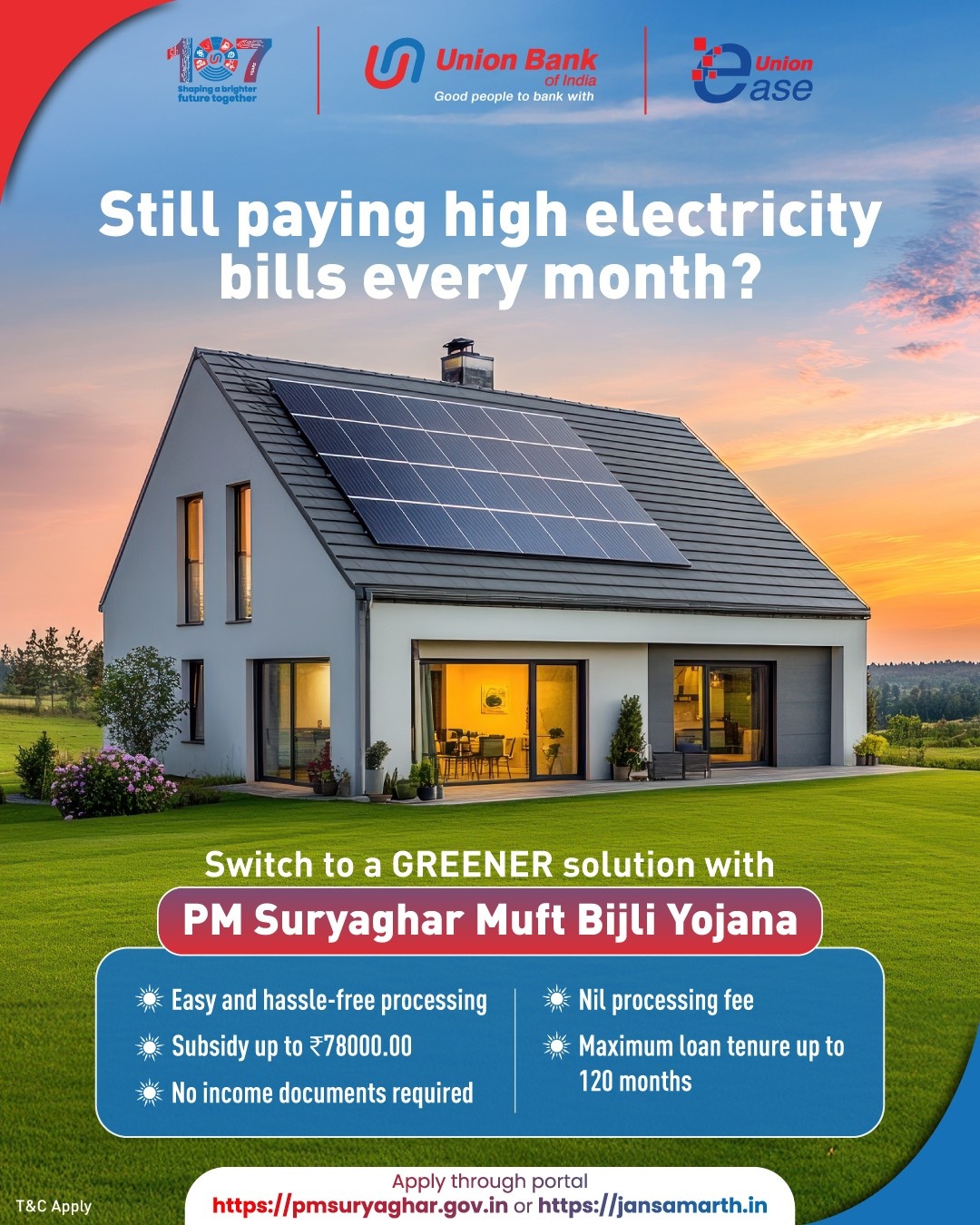
- Digital STP platform for Roof Top Solar Loans with zero branch visits
- Union Green Home Scheme offering concessional interest rates for IGBC-certified projects
- Business Retention Discount as a proactive customer retention tool
- VYOM 2.0 mobile app integrating 400+ features and end-to-end retail loan access
SKOCH Award Nominee
Category: Banks
Sub-Category: Leadership – Retail Banking
Project: Retail Lending Growth
Start Date: 4-01-2024
Organisation: Union Bank of India
Respondent: Renu K Nair
www.unionbankofindia.bank.in
Level: BFSI – 4
Video
See Presentation
Gallery



Case Study
Union Bank of India – Retail Lending Growth
Union Bank of India, one of India’s leading public sector banks with a legacy dating back to 1919, has played a significant role in advancing retail banking as a key driver of inclusive economic growth. Following its amalgamation with Andhra Bank and Corporation Bank in 2020, the Bank expanded its national footprint to over 8,600 branches, 9,000 ATMs, and 25,700 business correspondent points. With total business exceeding ₹22 trillion as of September 2025, Union Bank of India recognised retail lending as a strategic pillar for sustainable growth, portfolio diversification, and customer-centric banking. In an increasingly competitive and buyer-driven retail credit market, the Bank undertook a comprehensive transformation of its retail lending architecture under the project titled “Retail Lending Growth.”
The retail lending landscape in India has evolved rapidly over recent years, shifting from a supply-constrained seller’s market to a highly competitive buyer’s market. Customers today demand faster turnaround times, transparent pricing, digital convenience, and tailored products. Simultaneously, banks face pressure to grow retail portfolios without compromising asset quality, regulatory compliance, or risk management. Union Bank of India identified several structural and operational challenges in this environment, including fragmented loan processing at branch level, delays in credit decision-making, rising competition from peer banks offering aggressive pricing, and the need to deepen penetration across diverse socio-economic segments, including rural and semi-urban borrowers.
To address these challenges, the Bank initiated a fundamental restructuring of its retail lending operations by adopting a centralized and empowered model. Retail Loan Points (RLPs) were established across regions, each headed by senior officers with enhanced sanctioning powers. These RLPs functioned as single-window hubs capable of handling loan processing, appraisal, sanction, and disbursement under one roof. By centralizing expertise and delegating higher authority, the Bank significantly reduced dependency on branch-level approvals, enabling quicker decision-making and improved consistency in credit assessment. Proposals exceeding RLP delegation were routed to Centralised Retail Loan Processing Committees (CRLC-I and CRLC-II), ensuring faster approvals even for complex or deviation cases.
Alongside structural reforms, Union Bank of India introduced several innovative product and process interventions to strengthen its retail portfolio. One of the key initiatives was the Business Retention Discount (BRD), designed to retain existing home loan customers facing takeover threats from competing lenders. By offering interest rate concessions to loyal borrowers, the Bank not only protected its existing portfolio but also reinforced long-term customer relationships. The Bank also rolled out festive-season waivers on processing fees for home and vehicle loans, reducing upfront costs for borrowers and boosting loan demand during peak periods.
Digital transformation formed a core component of the retail lending growth strategy. Union Bank of India launched fully digital Personal Loan and Vehicle Loan journeys, enabling customers to apply through the Bank’s website or mobile application without visiting a branch. A significant innovation was the digital straight-through processing (STP) platform for Roof Top Solar Loans, which allowed borrowers to complete documentation, upload vendor quotations, and receive approvals digitally. This initiative positioned the Bank as a pioneer in green financing while supporting the national agenda for renewable energy adoption.
Further reinforcing its sustainability focus, the Bank introduced the Union Green Home Scheme, offering concessional interest rates for housing projects certified by the Indian Green Building Council and other recognized rating agencies. This initiative encouraged environmentally responsible construction while expanding the Bank’s housing loan portfolio. To enhance digital engagement, the Bank launched the upgraded VYOM 2.0 mobile application, integrating over 400 features and providing seamless access to retail loan products and services.
The impact of these initiatives was both measurable and significant. During the period from April 2024 to March 2025, Union Bank of India’s retail loan growth surpassed industry growth, with momentum continuing through September 2025. The share of retail loans in the Bank’s total advances increased steadily, strengthening balance sheet resilience and reducing concentration risk. Importantly, this growth was achieved alongside improvements in asset quality. Retail non-performing assets declined by approximately 1.22 percentage points, while stress levels reduced from 9.13 percent to 6.95 percent, reflecting prudent underwriting and effective portfolio monitoring.
One of the most notable outcomes was the exponential growth in the education loan portfolio. Under a focused mission initiated earlier, the Bank successfully doubled its education loan book within two years, reaching over ₹15,200 crore by September 2024. A significant portion of this growth was driven by overseas education loans, including substantial participation from female borrowers, reinforcing the Bank’s commitment to social inclusion and human capital development.
Despite these successes, the transformation journey was not without challenges. Scaling retail lending required careful balancing of growth ambitions with credit discipline. The Bank recognized that quality underwriting, realistic income assessment, and alignment of EMI structures with borrower cash flows were critical to long-term sustainability. Educating customers about repayment obligations, interest rate variability, and credit behavior emerged as an essential component of portfolio health. These learnings informed continuous refinement of product design and risk management practices.
Looking ahead, Union Bank of India has articulated a clear roadmap for retail lending growth, targeting a retail loan portfolio of ₹4.75 trillion by March 2029. The future strategy emphasizes digital-led expansion, green and sustainable lending, deepening financial inclusion, advanced data-driven risk analytics, and enhanced customer experience. The Bank’s retail lending transformation demonstrates that sustainable success lies not merely in volume growth, but in creating a balanced ecosystem that integrates innovation, risk management, operational efficiency, and customer trust.
For more information, please contact:
Renu K Nair at Gm.retailassets@unionbankofindia.bank.in
(The content on the page is provided by the Exhibitor)