
Green Finance under Retail Lending – Union Bank of India

Green Finance under Retail Lending
Problem
- High dependence on paper-based lending and card issuance processes leads to resource inefficiency and a higher carbon footprint.
- Limited access to sustainable finance products for retail customers, including green homes, solar rooftops, and EVs.
- Lack of inclusive banking solutions for specially-abled customers, especially the visually impaired.
- Manual verification and approval processes are causing longer turnaround times and operational delays.
- Low awareness and adoption of green finance products among retail borrowers in the early stages.
Solution
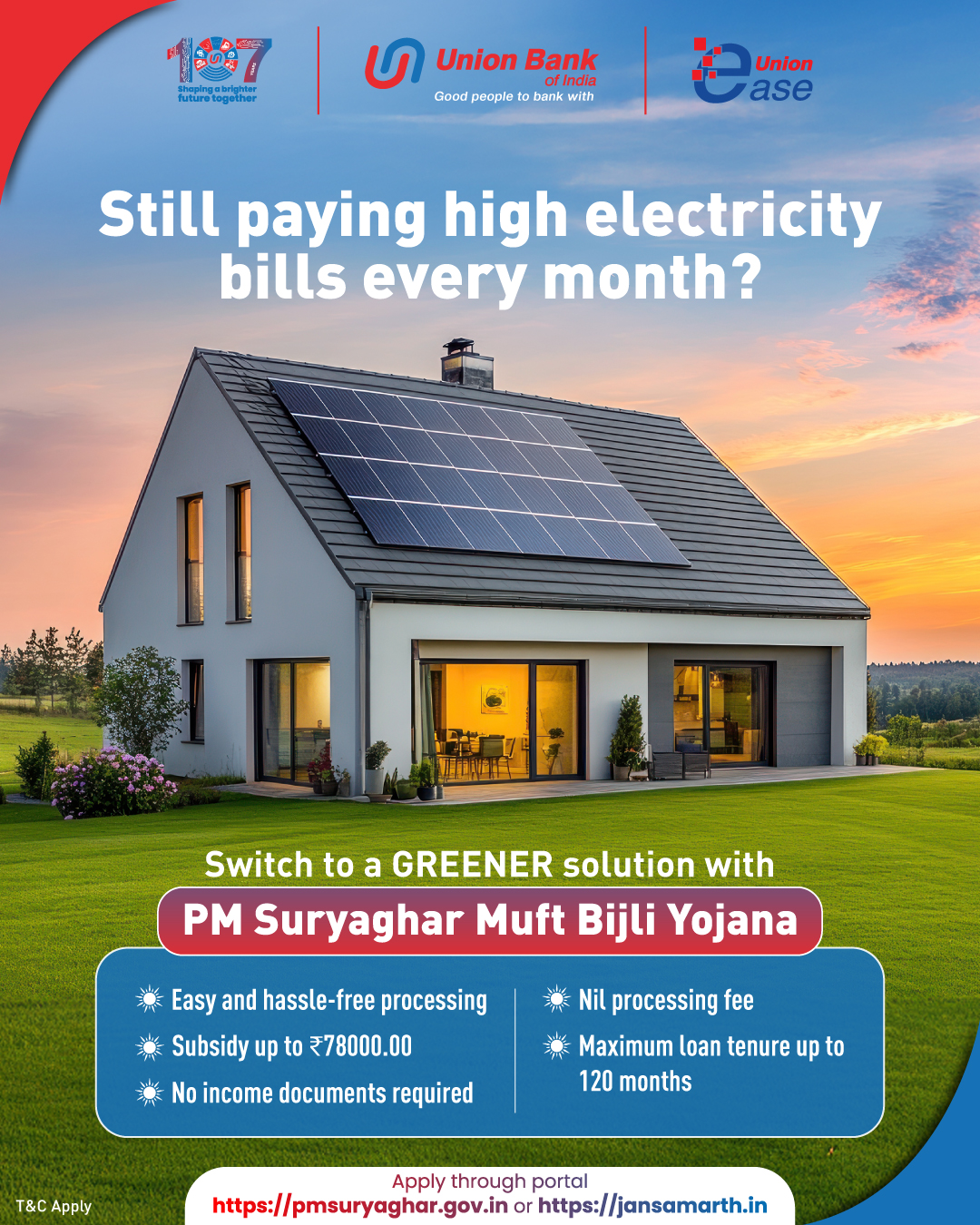
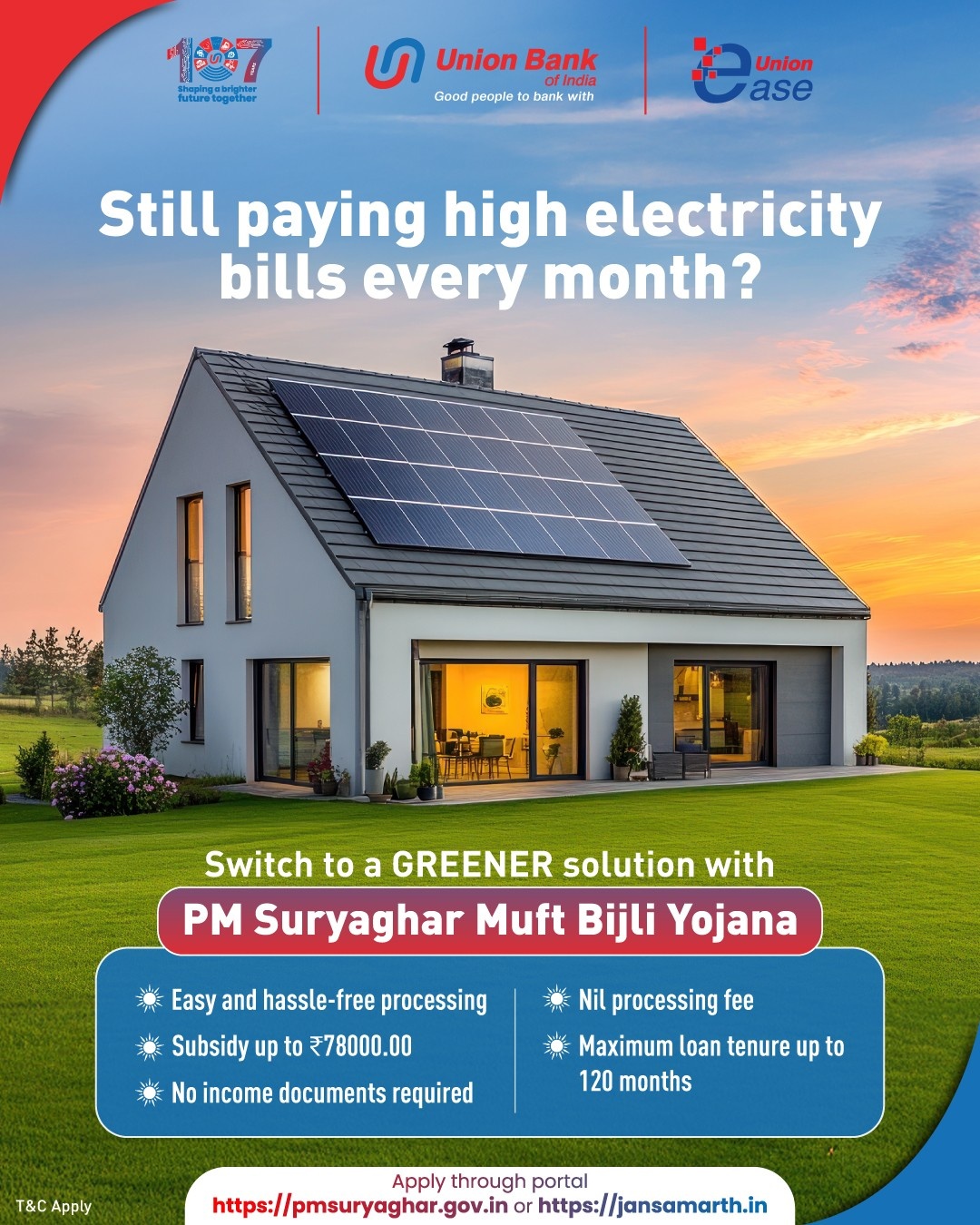
- Introduction of Green Finance products under Retail Lending covering green homes, solar rooftop systems, and electric vehicles.
- Implementation of a fully digital Straight Through Process (STP) for staff credit cards, eliminating manual intervention.
- Launch of Union SPARSH, India’s first Braille Credit Card, enabling independent financial access for visually impaired customers.
- Adoption of digital lending platforms with electronic verification and document execution to ensure paperless processing.
- Bundled incentives, concessions, and awareness programs to promote the adoption of sustainable finance solutions.
Outcomes
- Sanction of 811 green finance accounts amounting to ₹1,345 crore since product inception, indicating strong market traction.
- Solar rooftop loans saw significant growth, with ~46% sanctions through digital lending, improving speed and convenience.
- EV financing doubled within eight months, reflecting growing demand and readiness for sustainable mobility.
- Over 21,550 credit card applications were processed through STP, significantly reducing paper usage and turnaround time.
- Enhanced financial inclusion and social equity through SPARSH, reinforcing ESG-aligned banking practices.
Challenges
- Embedding digital transformation into core banking systems rather than treating it as an add-on.
- Designing accessibility features such as Braille embossing and tactile markers from the ground up.
- Change management and staff adaptation to fully digital, paperless workflows.
- Ensuring regulatory compliance while deploying end-to-end digital processes at scale.
- Creating sustained customer awareness and trust in new green and digital-first products.
Innovations
- Retail-focused Green Finance framework integrating environmental sustainability with mainstream banking products.
- End-to-end digital STP journey with instant approvals and Digital Document Execution (DDE).
- Industry-first Braille Credit Card (SPARSH) with tactile identification and enhanced security features.
- High digital penetration in solar and green lending, demonstrating scalable tech-enabled sustainability.
- Alignment of green finance initiatives with ESG goals, government sustainability push, and impact-based lending.
SKOCH Award Nominee
Category: Banks
Sub-Category: Leadership – Green Finance
Project: Green Finance under Retail Lending
Start Date: 4-01-2024
Organisation: Union Bank of India
Respondent: Renu K Nair
www.unionbankofindia.bank.in
Level: BFSI – 4
Video
See Presentation
Gallery




Case Study
Green Finance under Retail Lending – Union Bank of India
Union Bank of India has undertaken a comprehensive transformation of its retail banking operations by integrating sustainability, digital innovation, and financial inclusion into its core business strategy. Recognising that green finance extends beyond funding eco-friendly projects to fundamentally reshaping banking processes, the Bank adopted a holistic approach that aligns environmental responsibility, social equity, and governance excellence. Through its Green Finance under Retail initiative and the Digital Journey for Credit Cards, Union Bank has demonstrated how sustainability can be operationalised at scale while delivering measurable business outcomes.
The Indian financial ecosystem is witnessing a paradigm shift driven by climate concerns, regulatory push, and evolving customer expectations. Traditional retail lending and card issuance processes were heavily dependent on physical documentation, manual verification, and branch-centric workflows, resulting in higher resource consumption, longer turnaround times, and operational inefficiencies. Additionally, while demand for green housing, renewable energy, and electric mobility was rising, there was a lack of structured, accessible retail products that could effectively support this transition. Equally significant was the challenge of financial inclusion for specially abled customers, particularly the visually impaired, who faced barriers in accessing independent and secure credit facilities.
To address these gaps, Union Bank launched a suite of Green Finance products under its Retail Assets Vertical, focusing on green homes, solar rooftop installations, and electric vehicles. These products were designed not only to support environmentally sustainable assets but also to leverage digital lending platforms for faster sanctions and paperless processing. Since the inception of the Green Finance under Retail product in November 2024, the Bank has sanctioned 811 accounts amounting to ₹1,345 crore, reflecting rapid market acceptance and growing momentum. The solar rooftop scheme, in particular, gained significant traction over the last two years, with digital lending contributing approximately 46 percent of total sanctions, demonstrating the effectiveness of technology-enabled sustainability.
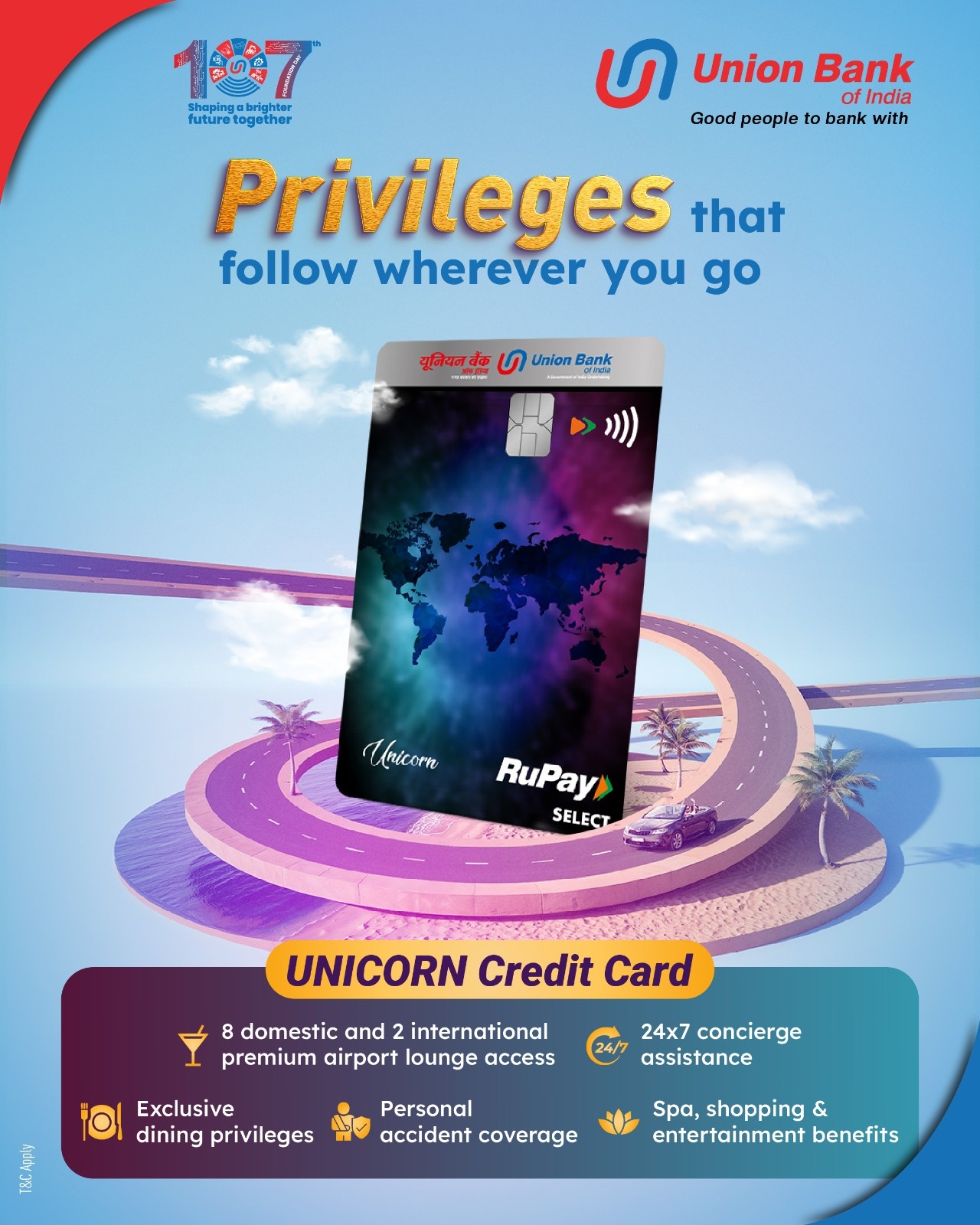
Parallel to its retail lending initiatives, Union Bank undertook a major digital transformation within its Credit Card portfolio. The Straight Through Process (STP) Journey for Staff Credit Cards was introduced to eliminate manual, paper-based workflows and replace them with an end-to-end digital process. Traditionally, credit card issuance involved extensive paperwork, physical document execution, and multiple layers of verification, leading to delays and excessive resource usage. The STP journey digitised the entire lifecycle, from application to approval and compliance, incorporating electronic verification and Digital Document Execution. Since its launch in November 2025, more than 21,550 applications have been processed through this eco-friendly and efficient model, significantly reducing turnaround time and paper consumption.
A landmark innovation under this transformation was the launch of Union SPARSH, India’s first Braille Credit Card for visually impaired customers. Financial inclusion is a critical pillar of sustainable development, yet visually impaired individuals often face dependency and accessibility challenges in using conventional banking products. SPARSH was conceptualised to empower these customers with independent financial access through tactile identification, Braille embossing, and enhanced security features such as photo options. Applications for SPARSH are processed digitally through the Loan Automation System, ensuring a seamless and paperless experience. By integrating accessibility features at the design stage rather than as an afterthought, the Bank set a new industry benchmark for inclusive banking.
The implementation of these initiatives was not without challenges. Embedding digital transformation into core banking processes required significant change management, system integration, and alignment across business, technology, and compliance teams. Designing inclusive products such as the Braille Credit Card demanded close attention to usability, regulatory requirements, and customer safety. Additionally, driving adoption of green finance products required sustained awareness efforts, bundled incentives, and confidence-building among borrowers unfamiliar with sustainable assets. However, strong leadership commitment, cross-functional collaboration, and a clear ESG vision enabled the Bank to overcome these hurdles.
The outcomes of these initiatives have been both quantitative and qualitative. Green Finance under Retail has shown robust growth, with green home, solar, and EV loans witnessing steady increases in sanctions. EV financing doubled within eight months during FY 2025-26, driven by expanding electric vehicle options in the market and supportive government policies. Internally, all Union Bank premises have been equipped with solar rooftop systems, reinforcing the Bank’s commitment to sustainability and contributing to its ESG accreditation goals. Operationally, digital processes have reduced carbon footprint, optimised resource usage, and improved efficiency across lending and card issuance.
From a strategic perspective, these initiatives position Union Bank as a leader in impact-based lending, moving beyond intention-driven sustainability narratives. The Bank has laid out an ambitious roadmap, targeting green home sanctions of ₹2,500 crore by March 2026, ₹6,000 crore by March 2027, and ₹10,000 crore by March 2028, along with substantial growth in green vehicle financing. Future plans include deeper integration of digital journeys into the Bank’s mobile platform, VYOM, to further enhance reach and reduce physical interactions.
The case of Union Bank of India illustrates that sustainable finance, when embedded into mainstream banking operations, can drive business growth, operational efficiency, and social impact simultaneously. By combining green retail lending, digital transformation, and inclusive product design, the Bank has created a scalable and replicable model aligned with national sustainability priorities and global ESG principles. This journey underscores that the future of banking lies in innovation that balances profitability with responsibility, ensuring long-term value for customers, the institution, and society at large.
For more information, please contact:
Renu K Nair at Gm.retailassets@unionbankofindia.bank.in
(The content on the page is provided by the Exhibitor)